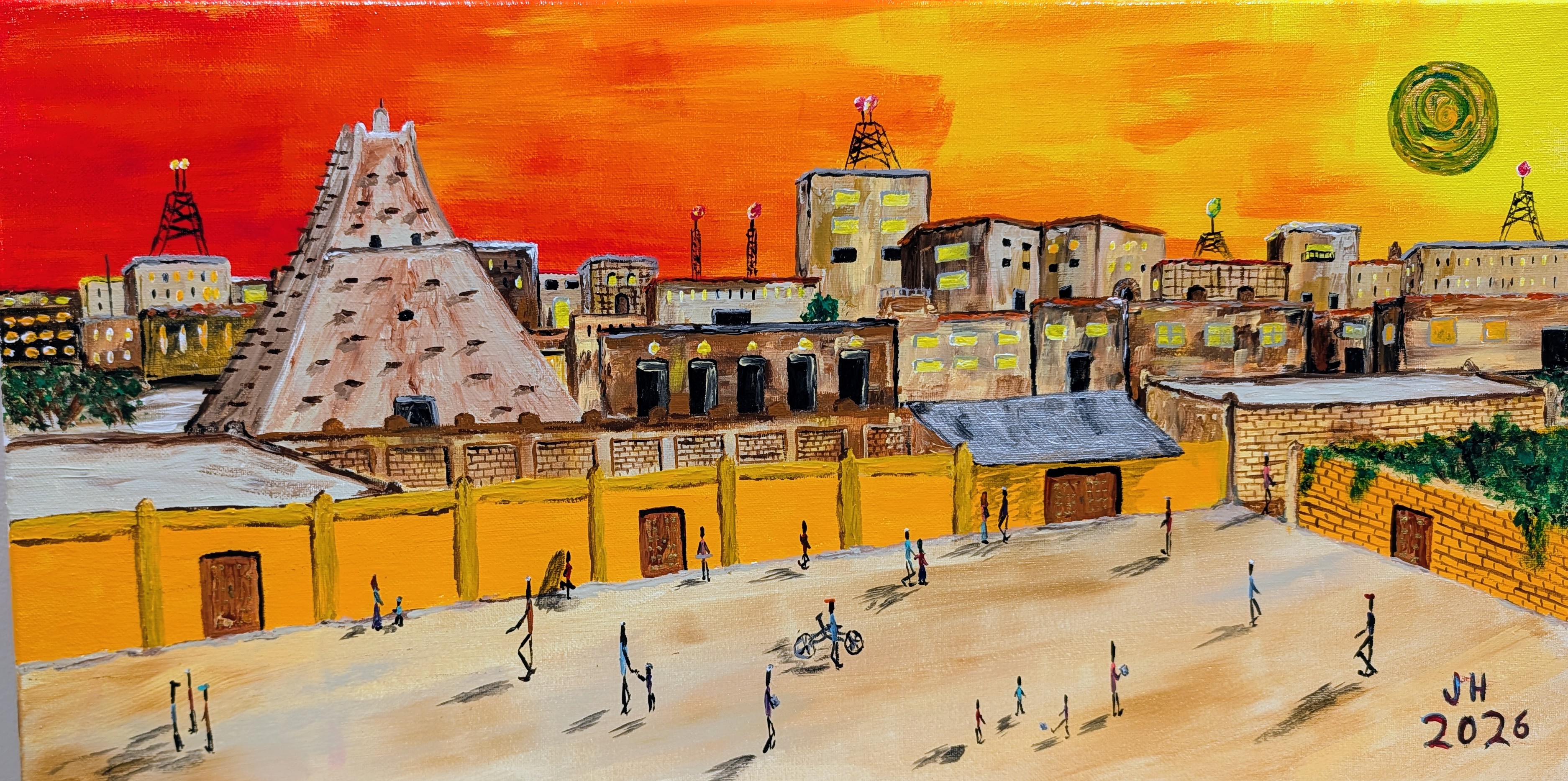
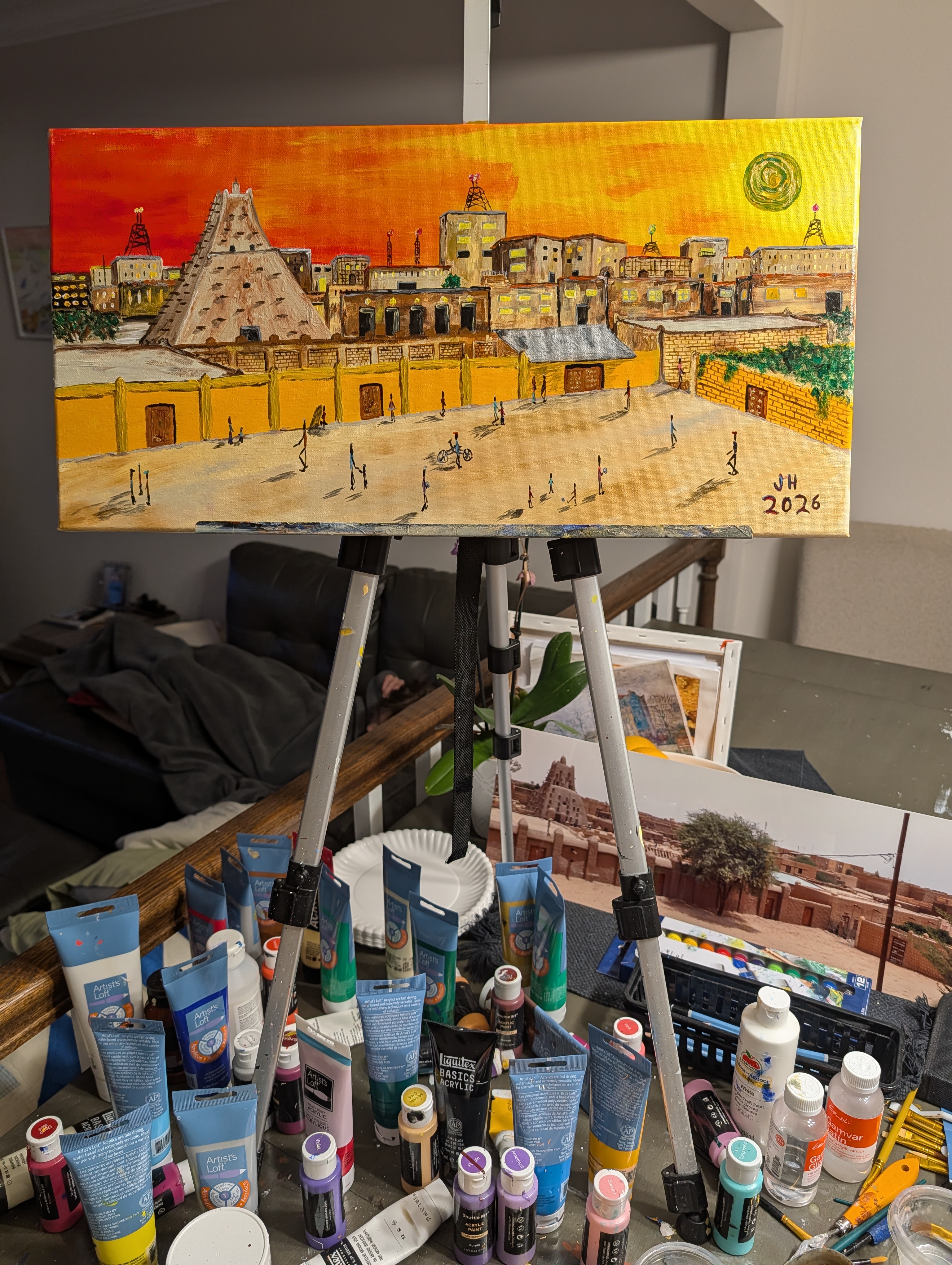
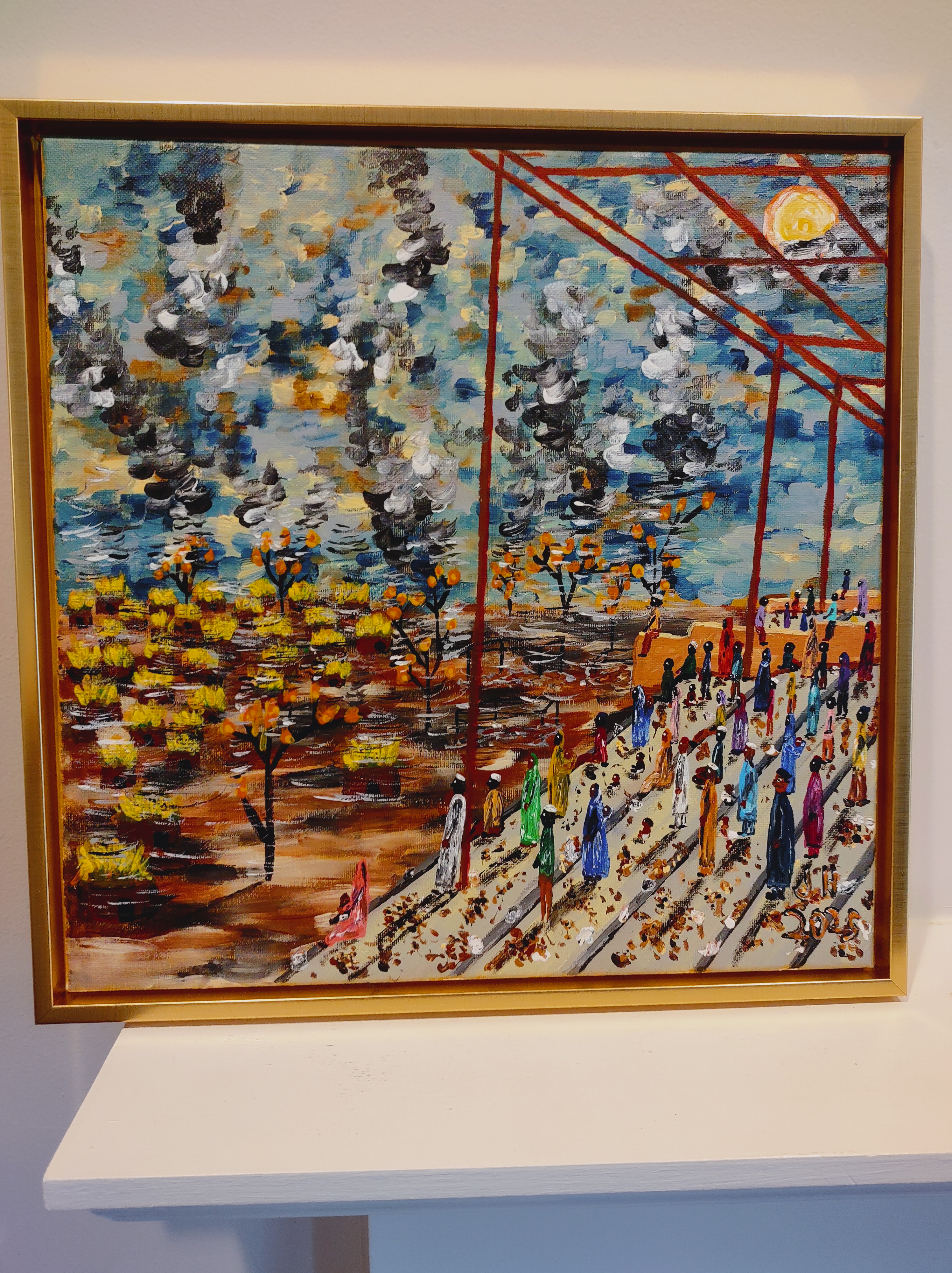
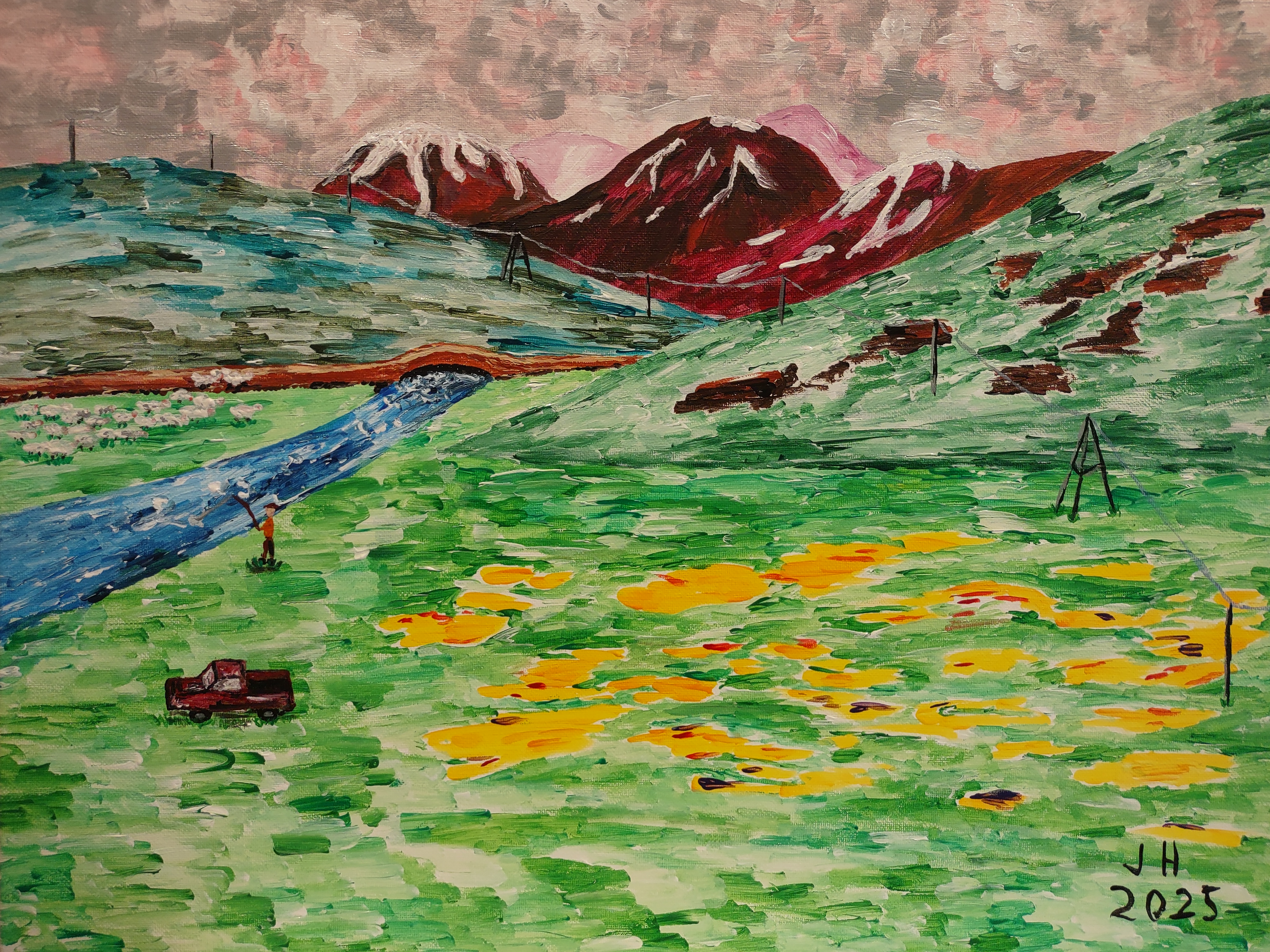
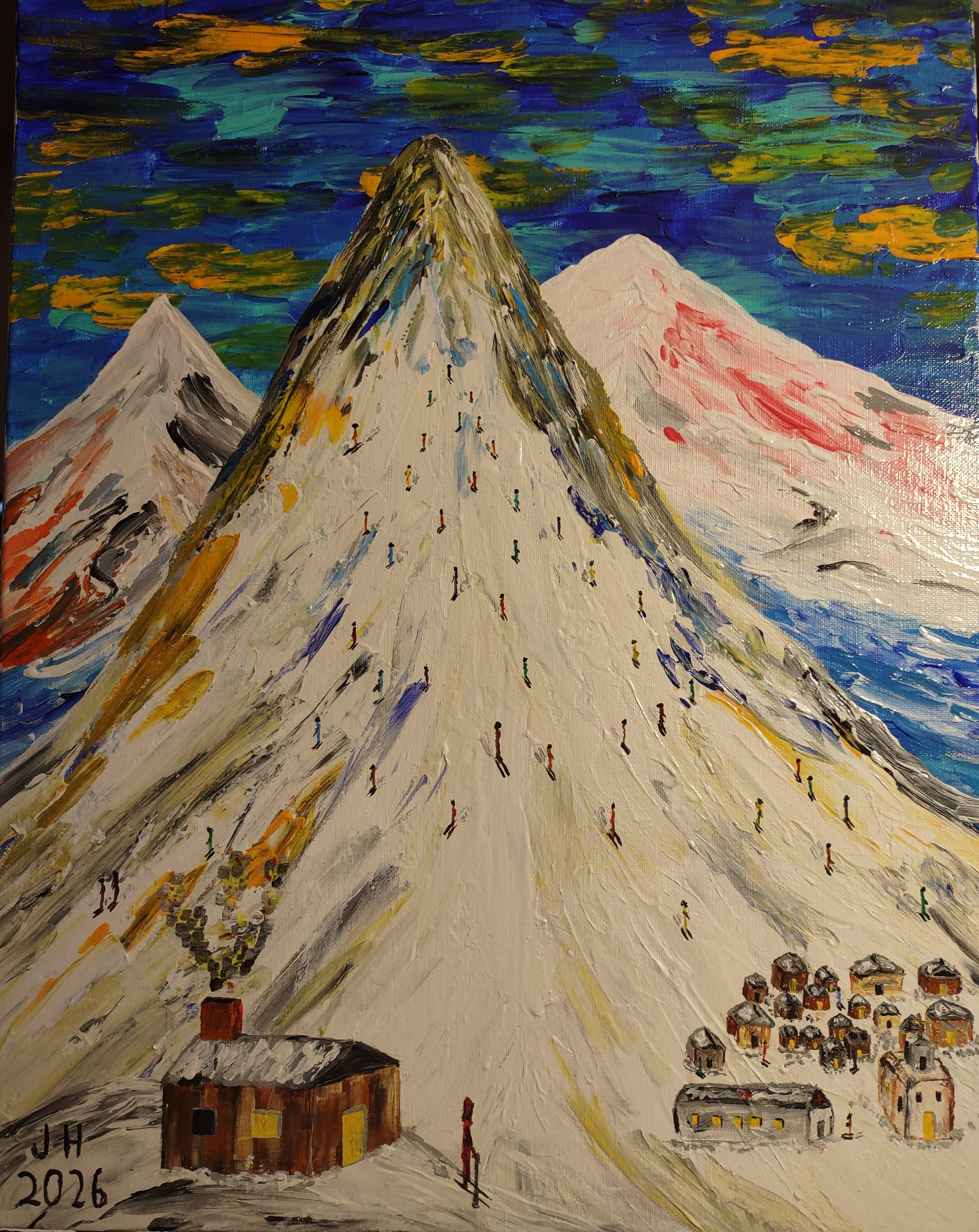
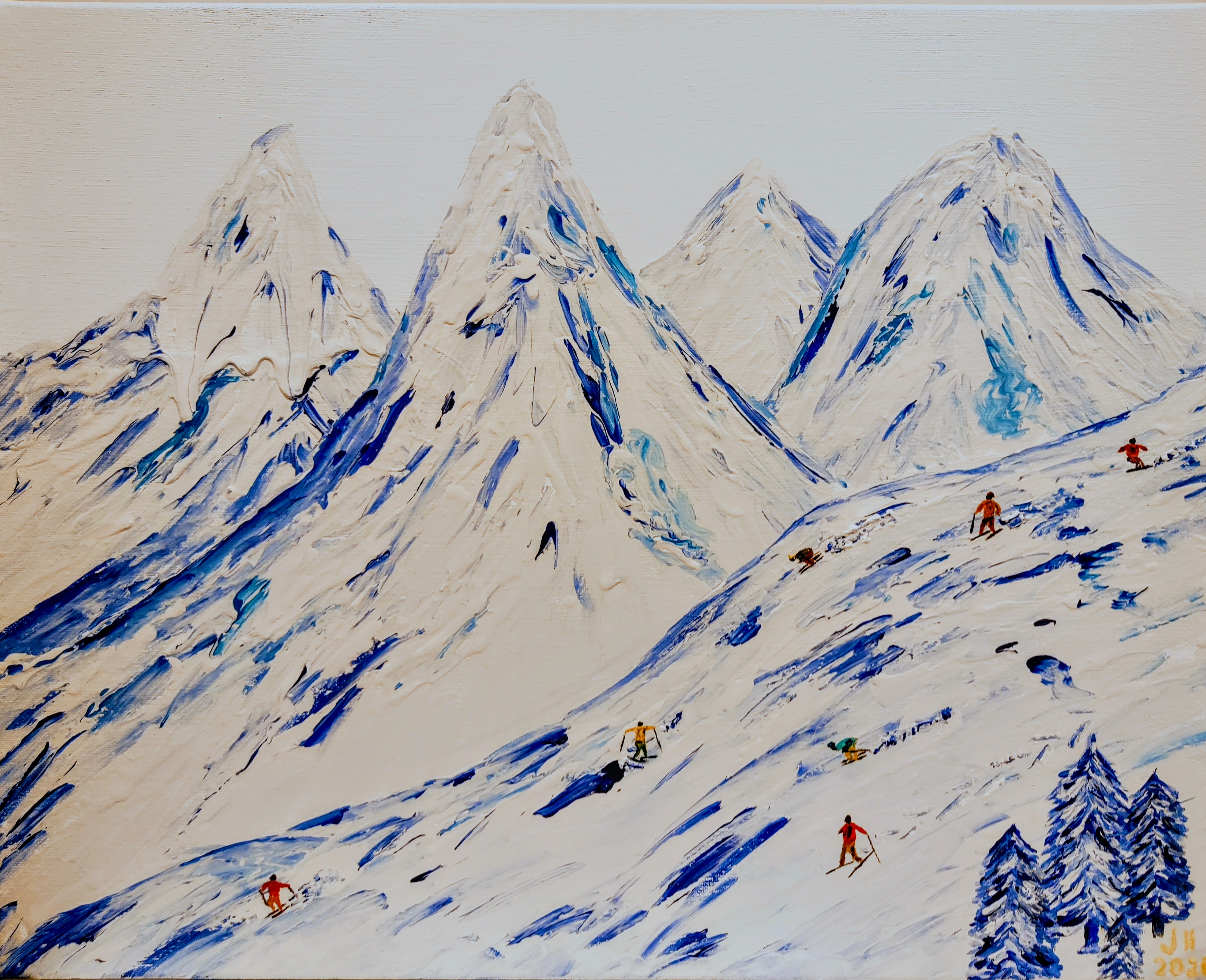
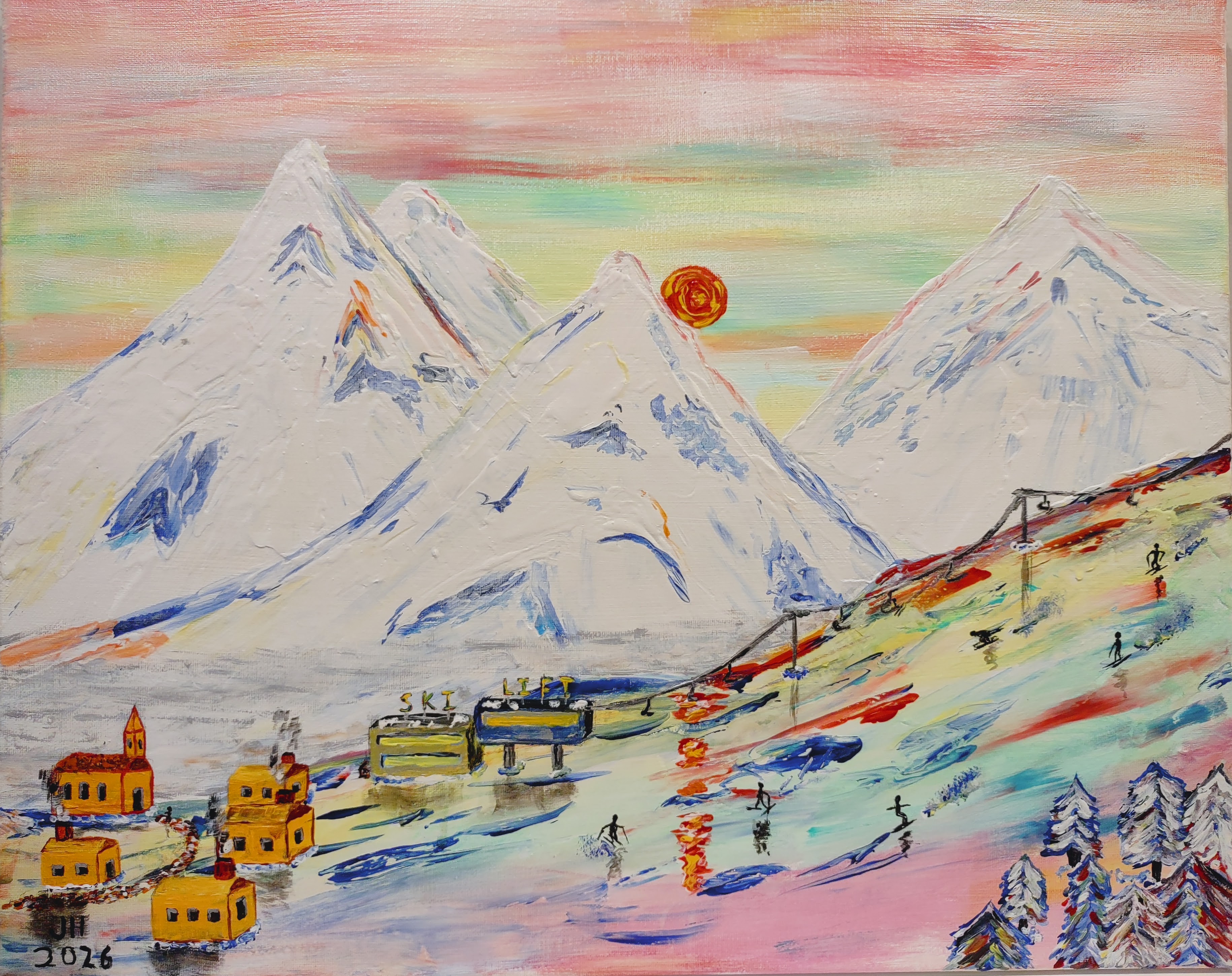
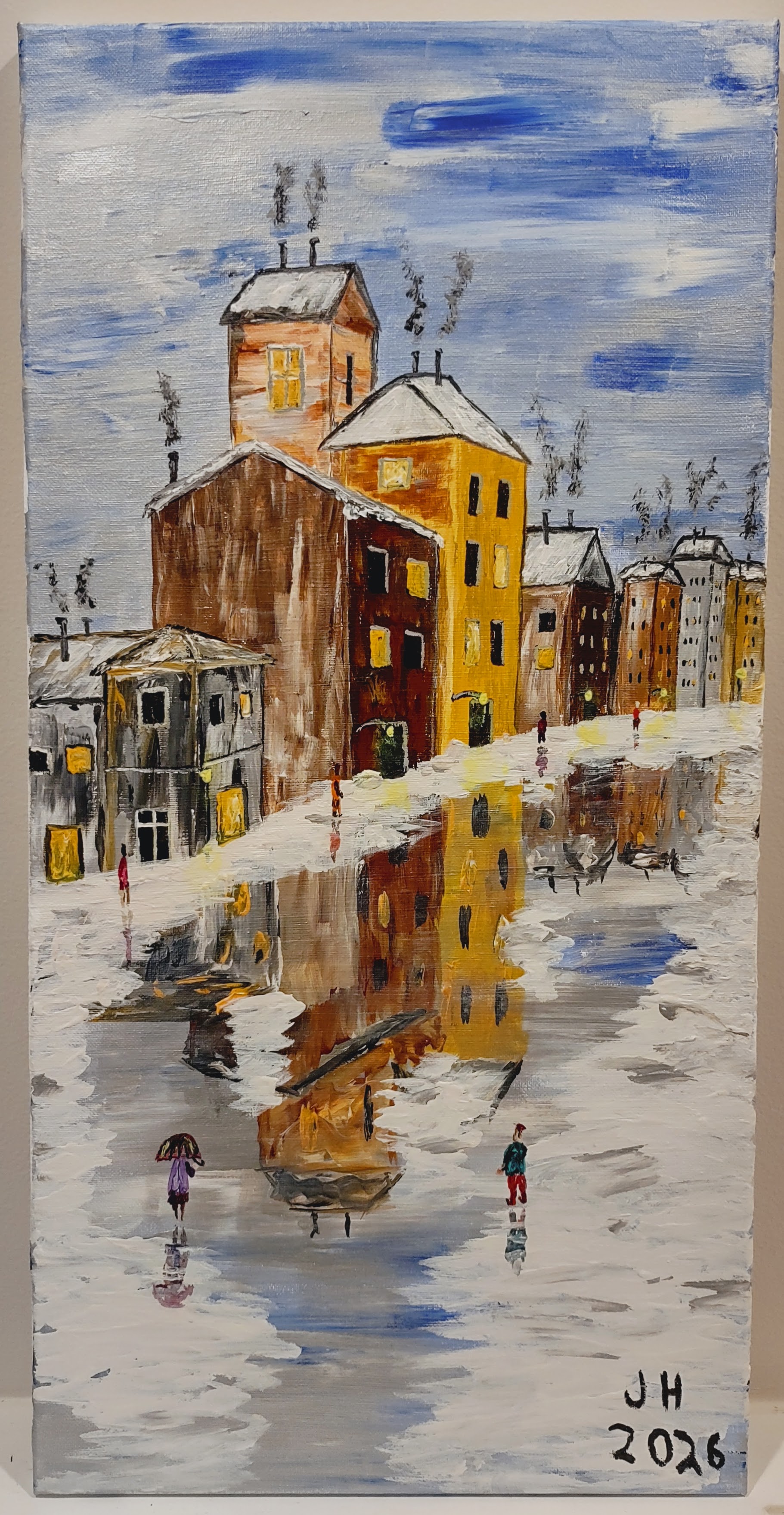
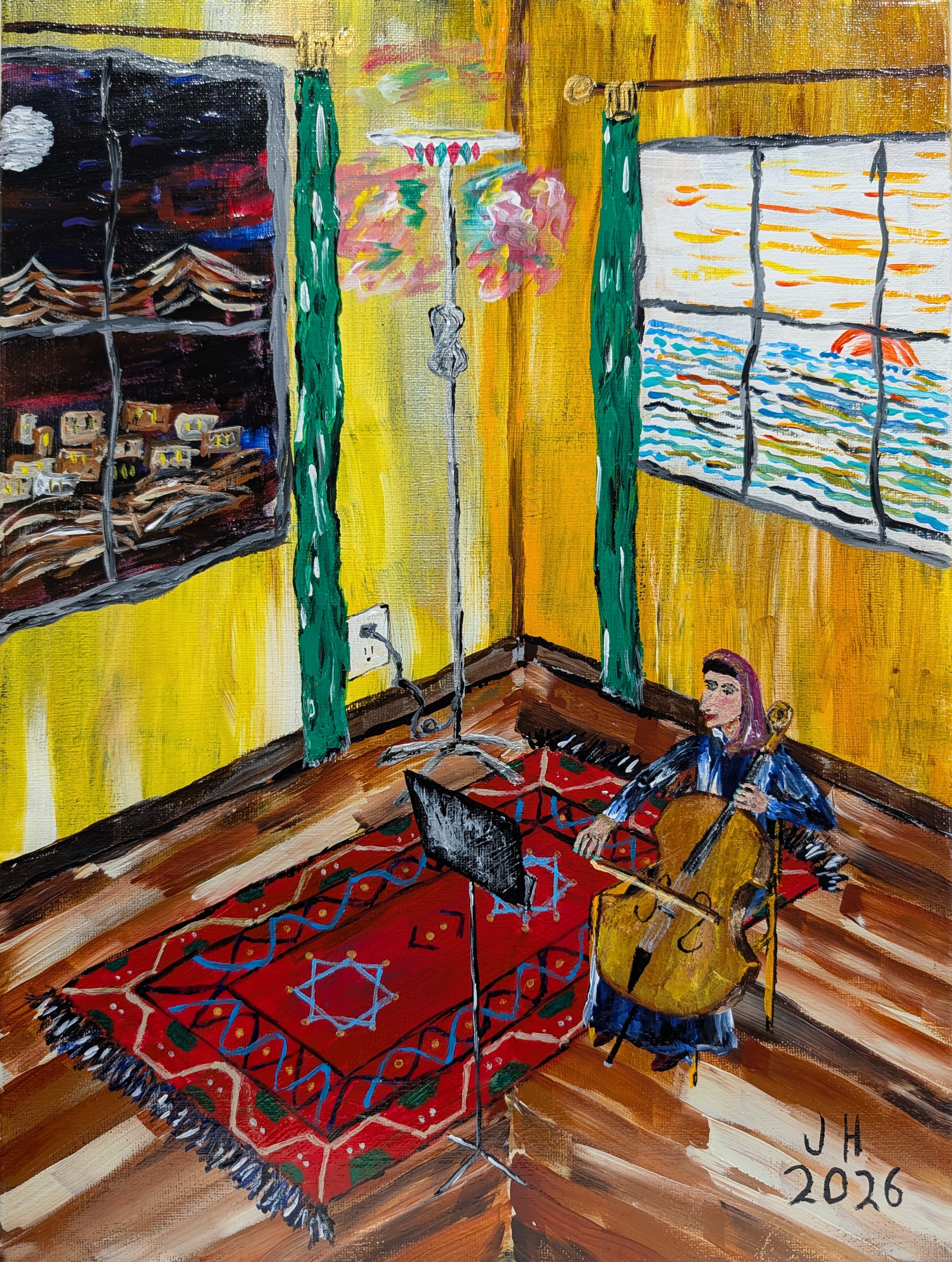
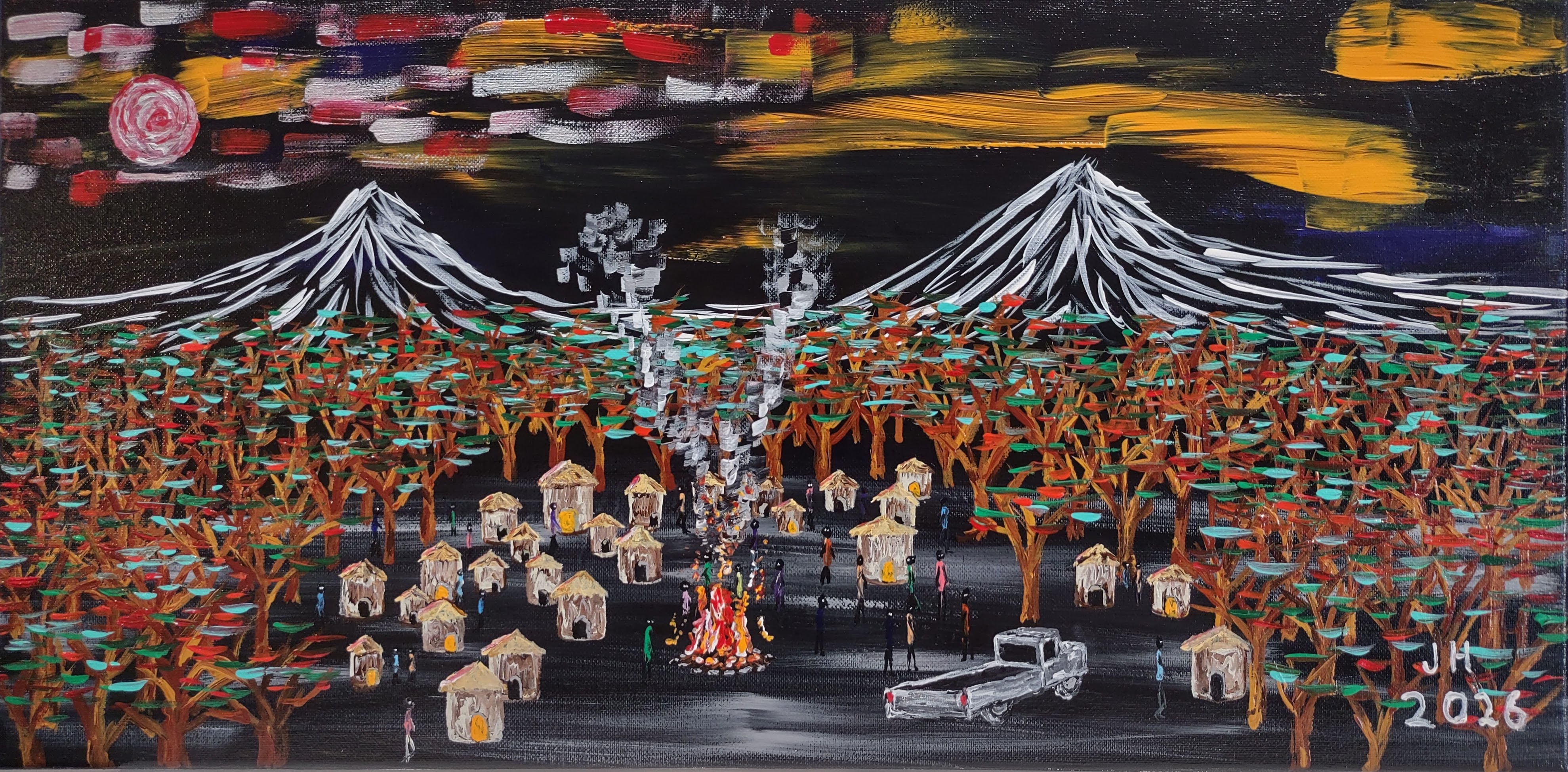
The Tuareg are deep desert Berbers, who live in the Sahara. They have been there since pre-history, probably from days when the Sahara was green and lush. They believe that they are the original Egyptians who built the pyramids, pushed out by the Arabs to first build their Garamantian empire and then take refuge in the desert. They are matriarchal; the men are veiled. The tomb of Tin Hinan, their great queen, from the 400s, was “found” by the French in Algeria. She united the clans into the first great Tuareg kingdom. Their language is Afro-Asiatic, (the mother of six language groups, including the Semitic) and might even be the original. Their alphabet is ancient Phoenician. https://www.artpal.com/joeldhirst?i=319328-36
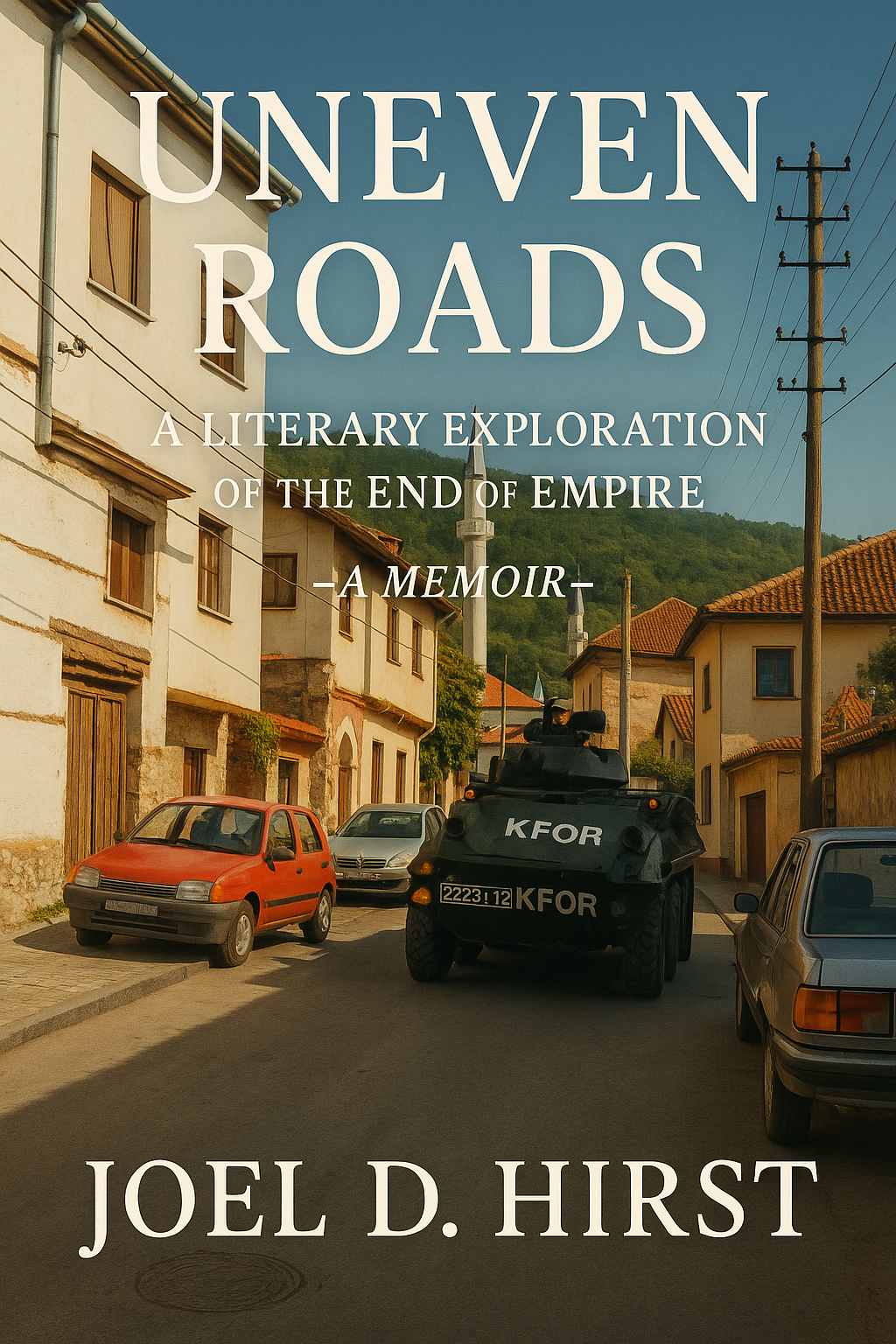
I also wrote a novel about the Tuareg and the 2012 civil war (which has since restarted). If you buy the painting, I’ll throw in a signed copy of the novel:
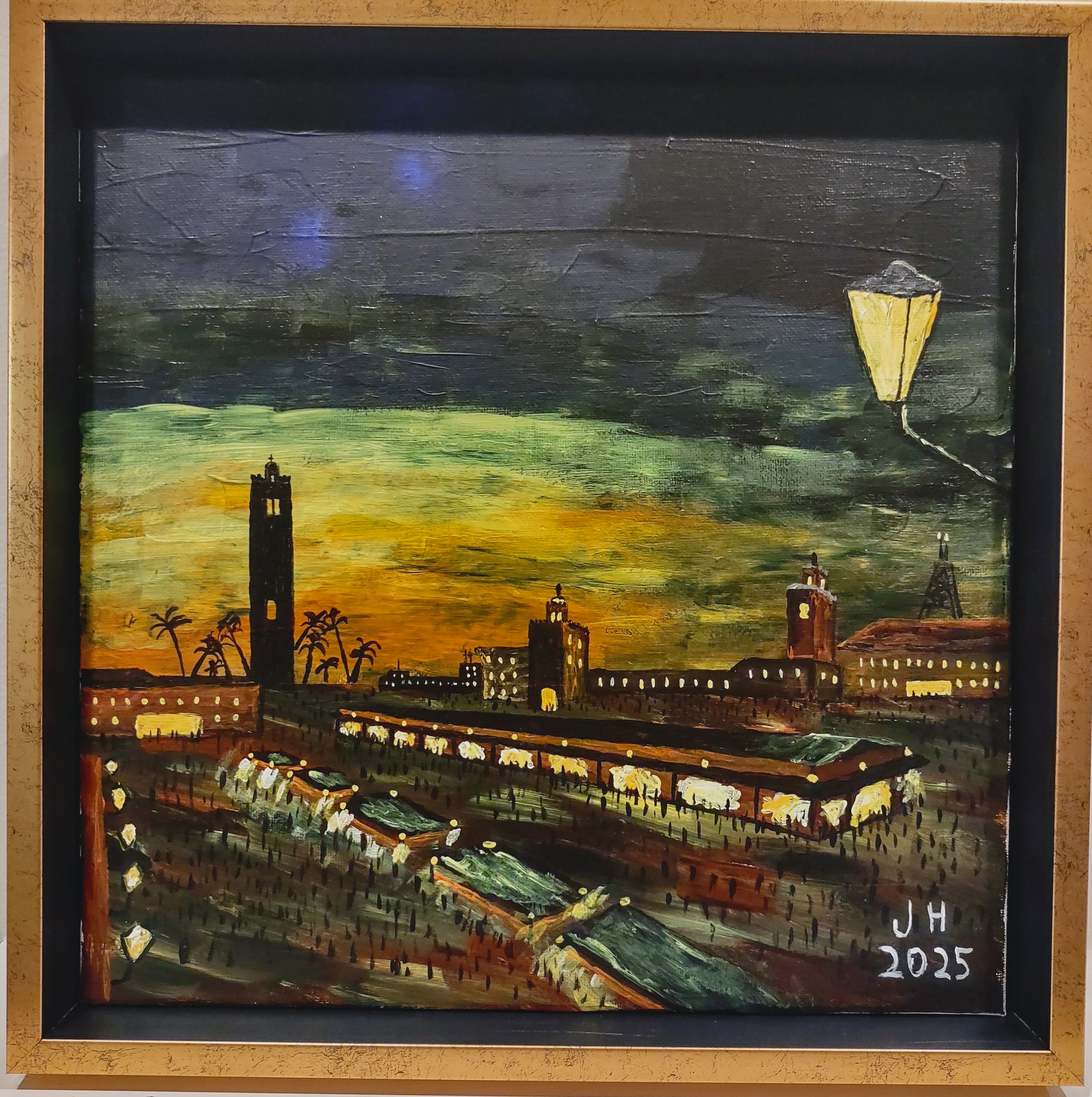
The center of Timbuktu is a flat sandy area called Sankore Place, under the Sankore Mosque which used to host the famous Sankore University 700 years ago. There, 20,000 people came from all over the Muslim world to study using the Socratic method. They have an epic library, 500,000 manuscripts from philosophers and medicine and astronomy to cooking and religious books. It is said that once a famous Islamic scholar came to Timbuktu to teach, but couldn’t pass the entrance exam to be a teacher and had to go to Fez in Morocco for four years of remedial studies before being allowed to return.
Timbuktu is now again besieged by jihadis, as it has been off and on for centuries. It is a perilous place to go, and very, very poor. But if you have your histories and your stories, you are never totally destitute.
OK, some thoughts on a Sunday morning in Spring: here goes. I’m returning this site to public viewing. Mostly as another place for people to find my novels, books, and paintings, or to give updates. I took all my previous posts and pushed them to drafts, for now — save my two most viral (found below): The Suicide of Venezuela and There Once Was a Dream That Was Rome: because Venezuela’s suicide continues in its 3rd iteration and our dream of Rome goes on. Some day I may republish my other stuff, or not: I wanted something fresh. I don’t plan to write much; I don’t really have a lot else to say. If my words were going to change the world, after 15+ years of writing, they would have.
I did finish my memoirs. They aren’t published yet, but they will be eventually (I’ve started looking for a publisher, if you have any ideas or are interested message me). I’ve titled them “Uneven Roads”. They are my stories about epic battles against foes in the dark places mired in misery, hic sunt dracones. About my motivations. About what it was like to work at the height of the American world order, and why it failed.
I am still painting a lot, the colors bring me great joy. You can see them on the paintings page. You can buy them on the artpal link — if you want one but can’t afford it message me and we’ll work something out. Same with books. Those, I think, are my lasting works. When everything returns to dust and people have forgotten my name, somebody will stumble across a colorful old painting at a swap meet or a novel about West Africa or Armenia in an old used bookstore, thick with dust, and will think to themselves, “I wonder who did this?” And that will have to be enough.
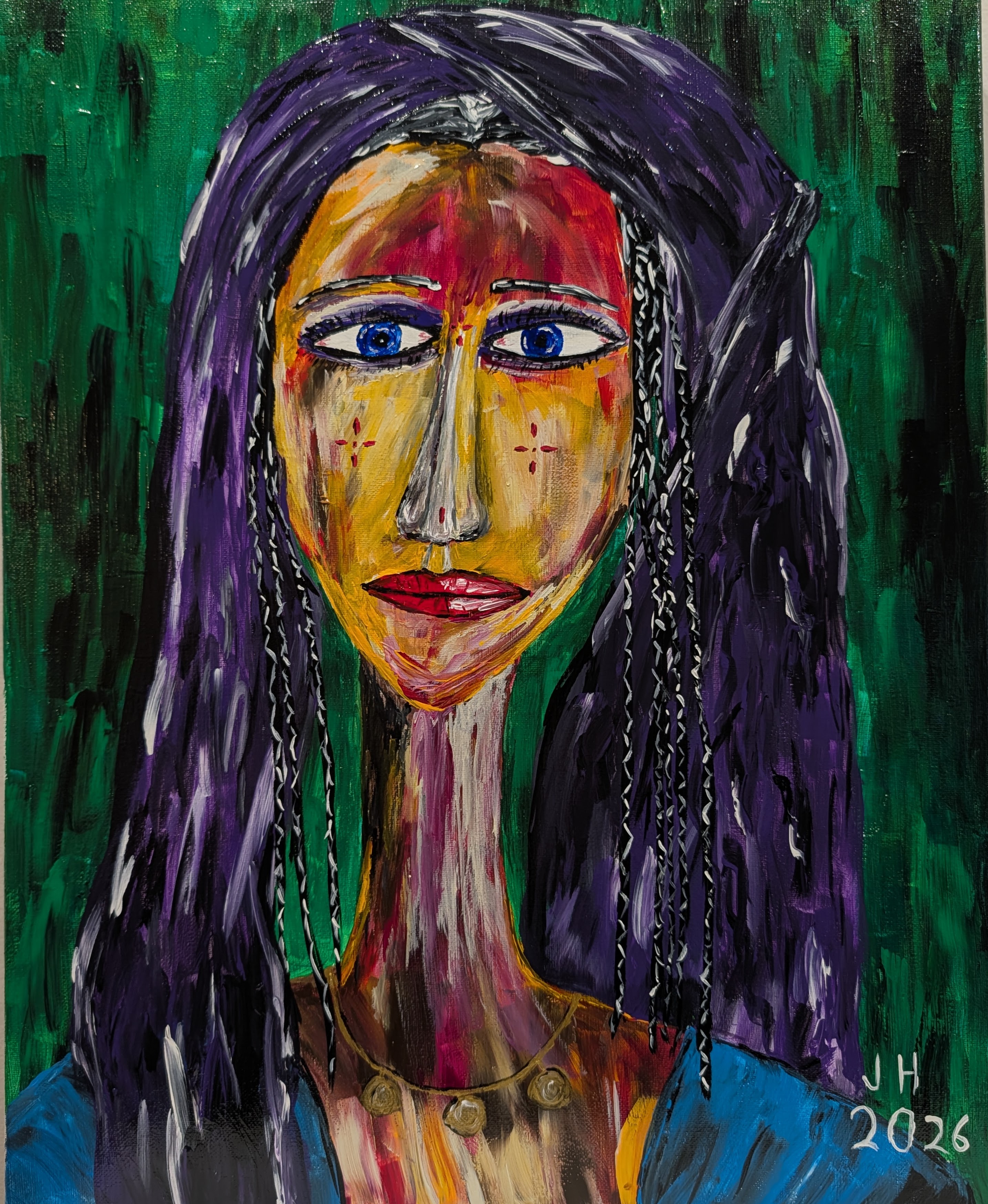
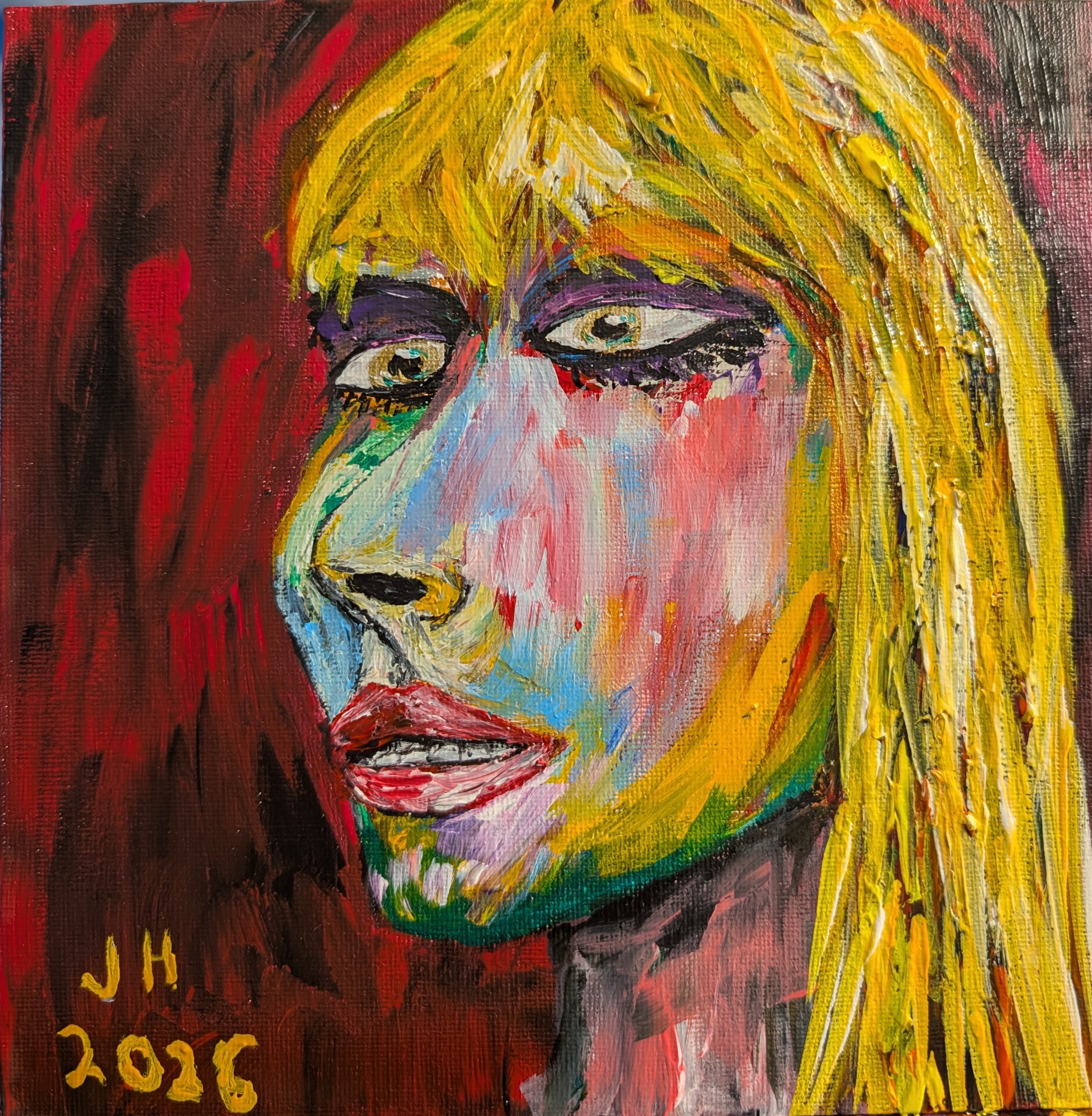
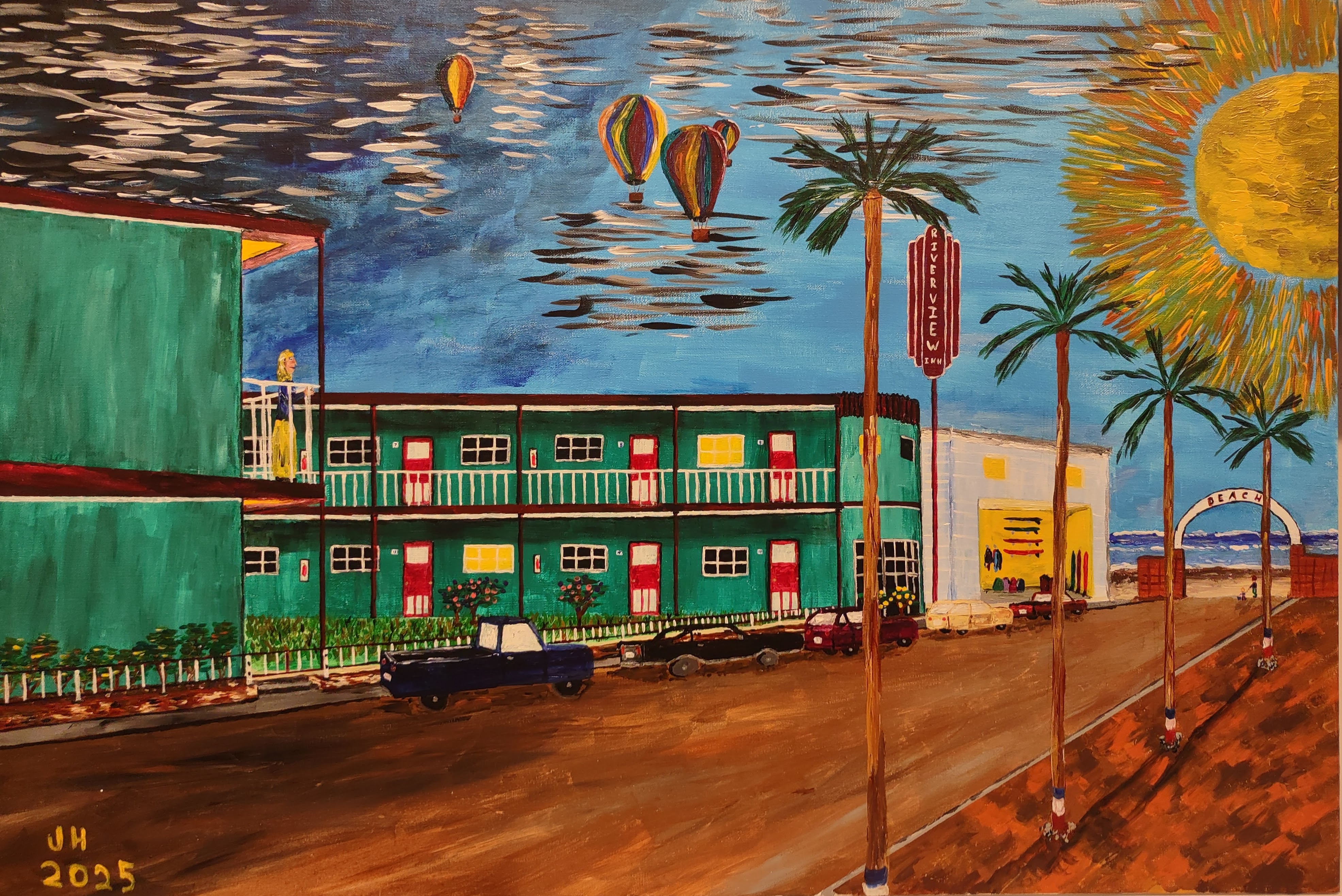
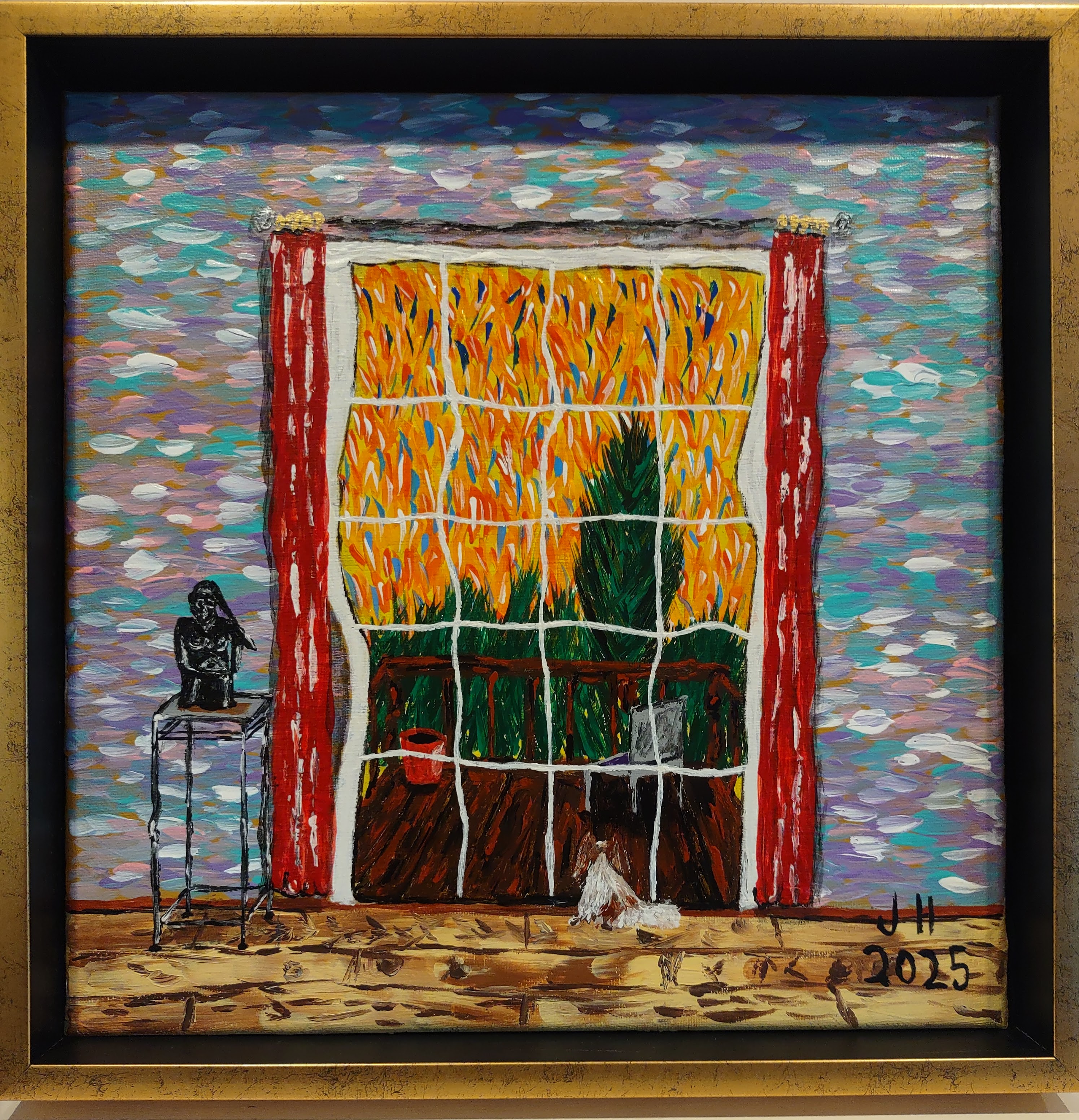
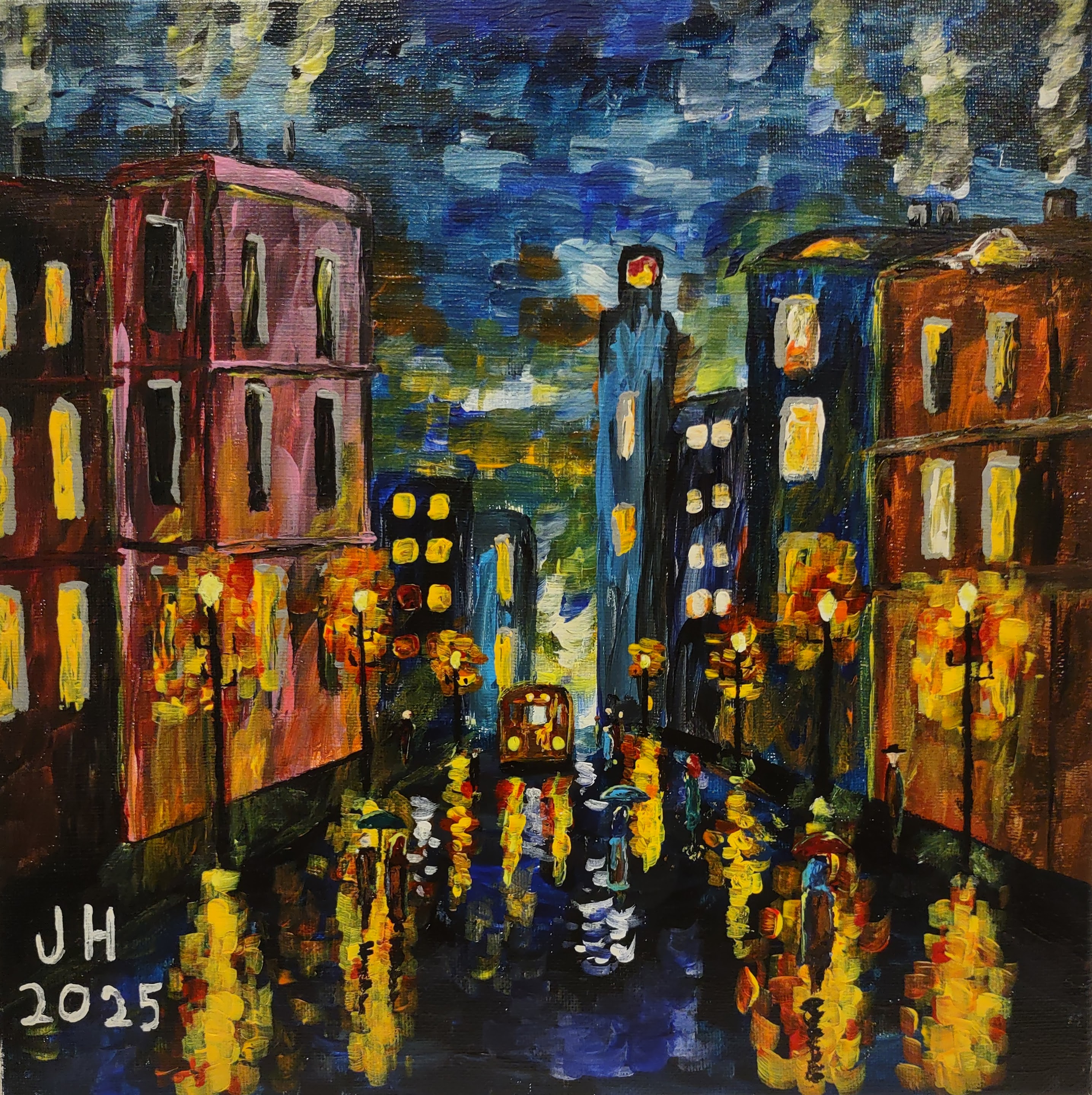
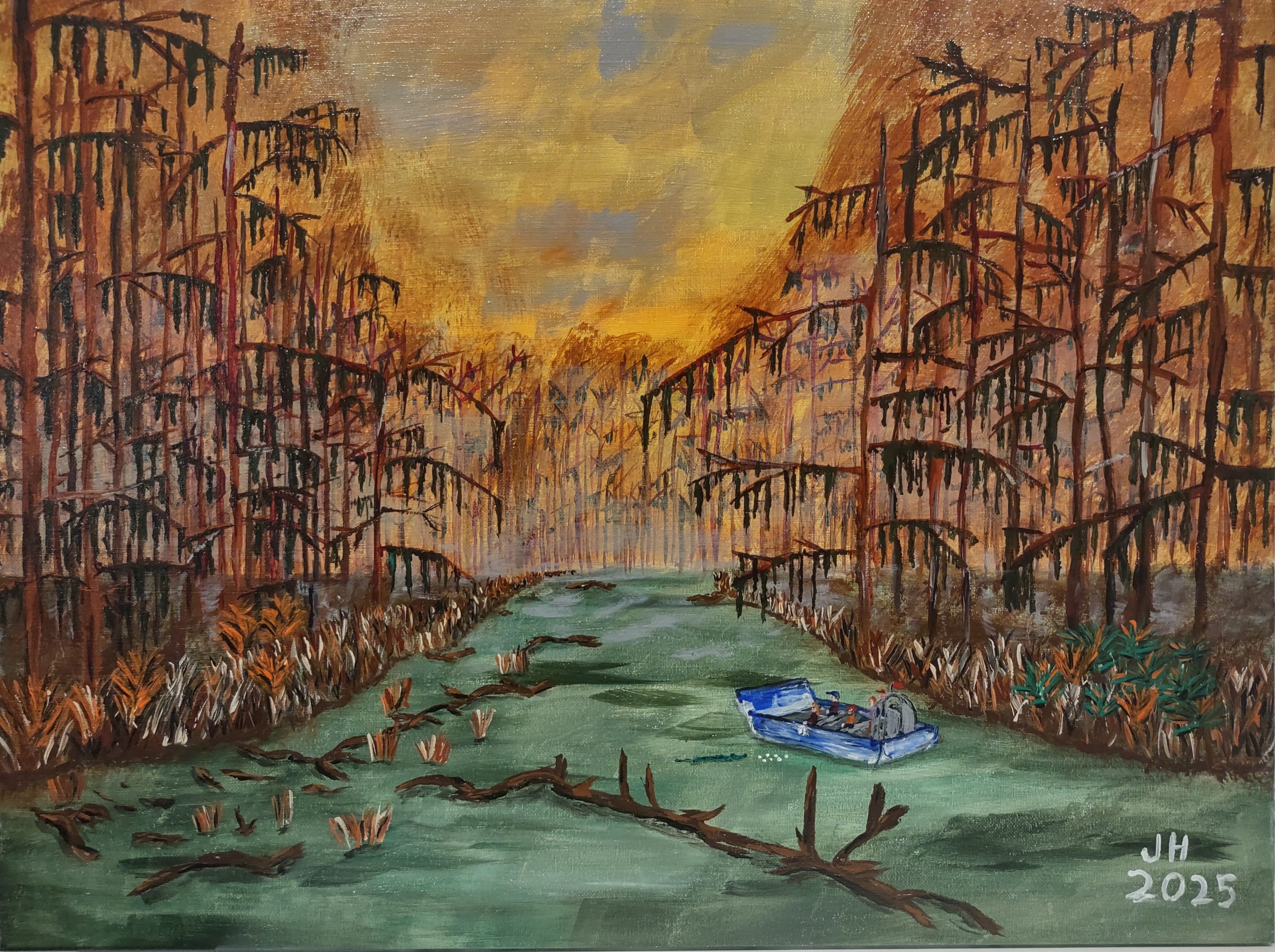
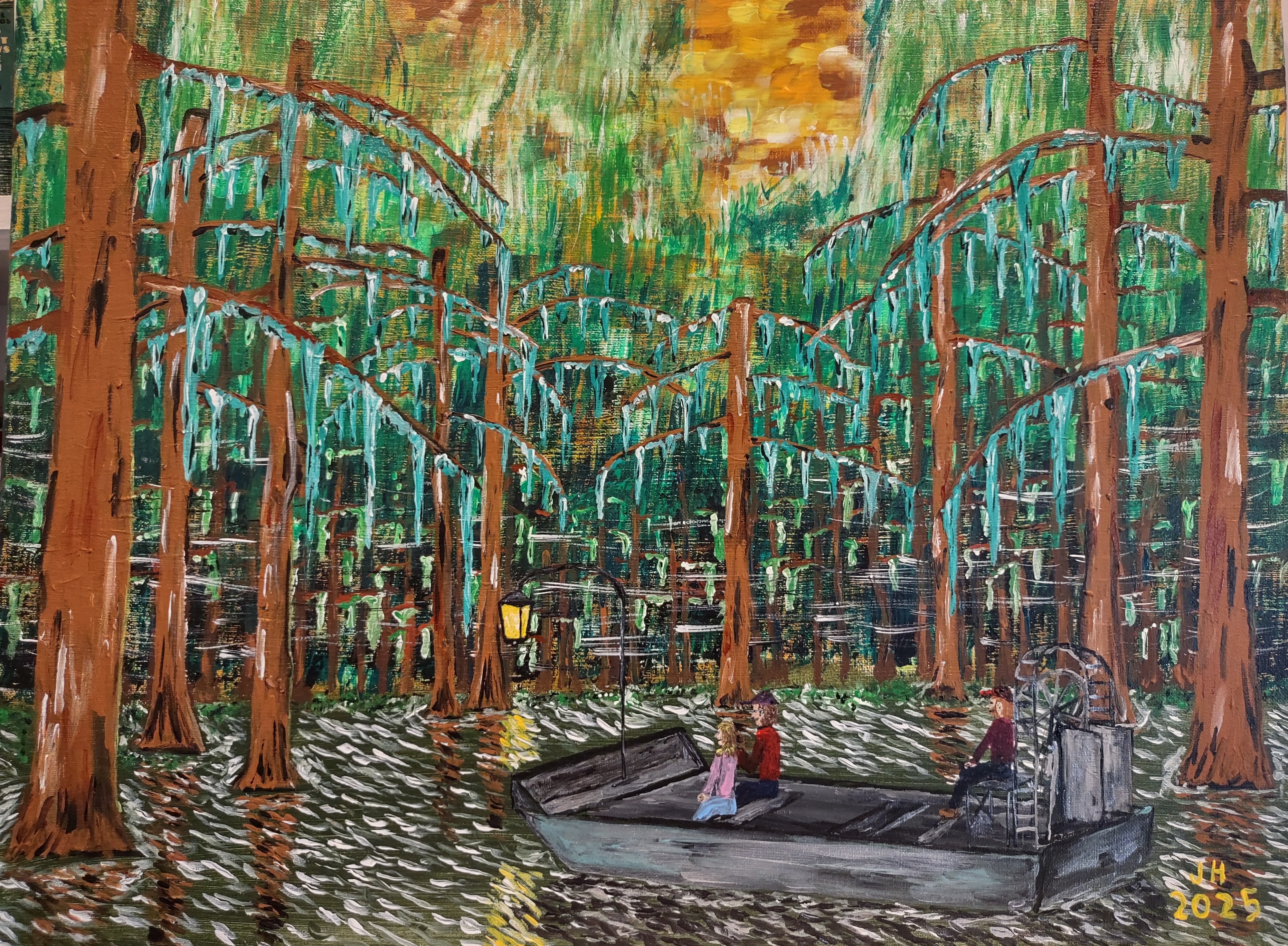
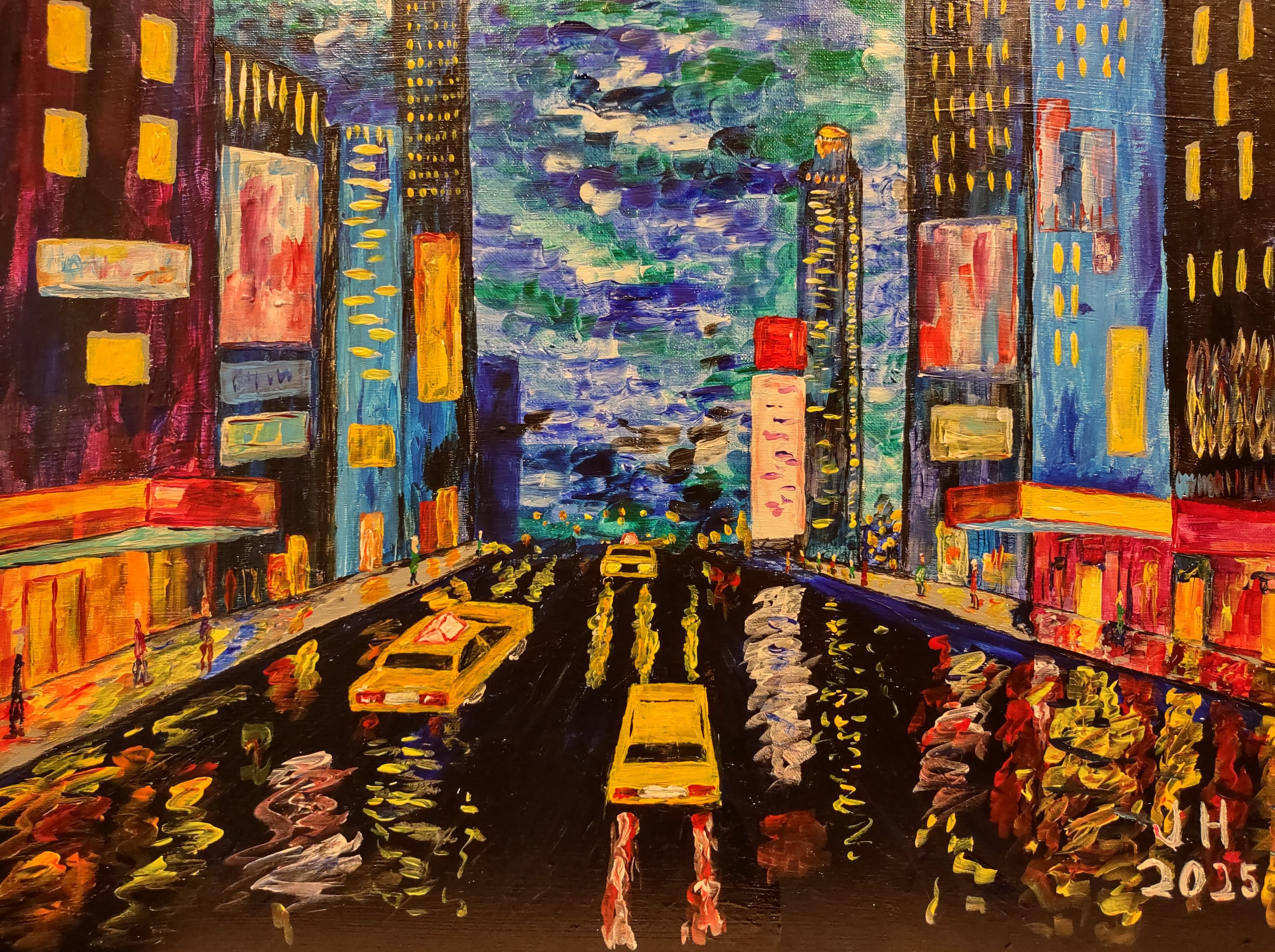
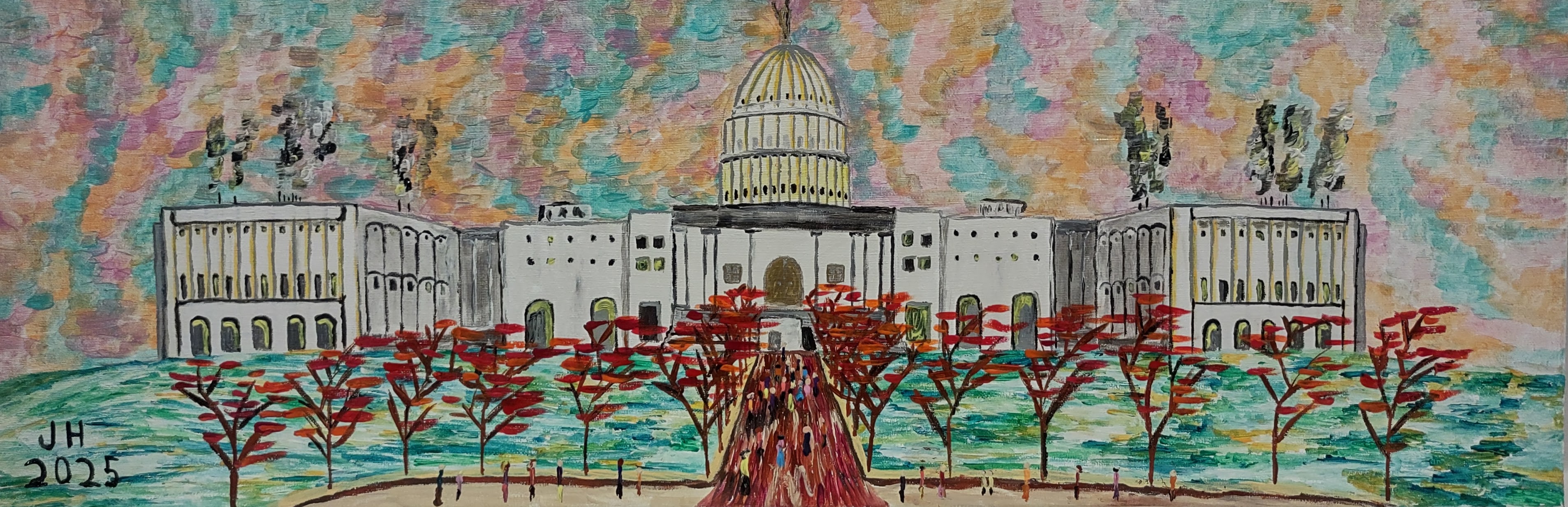
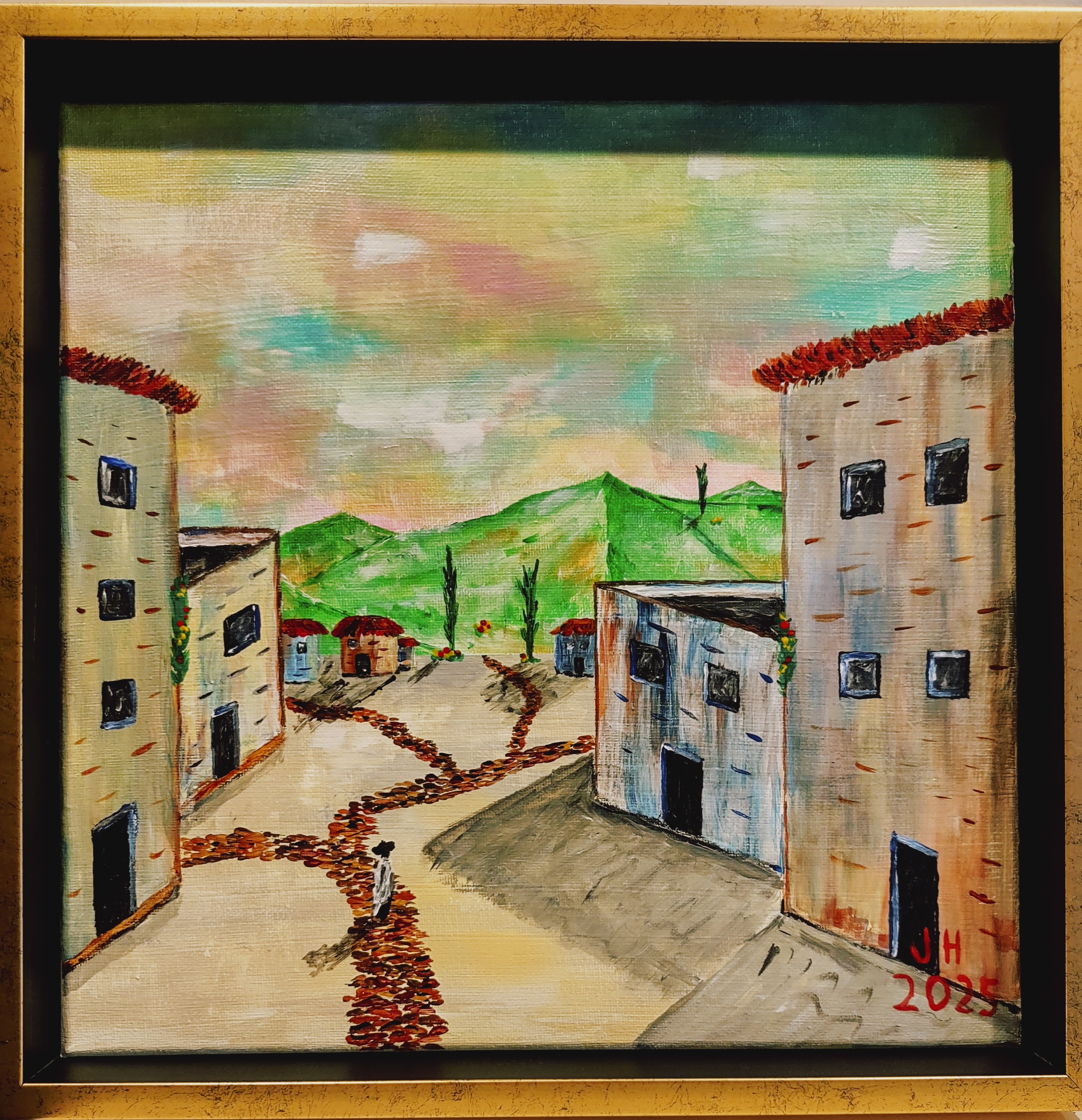
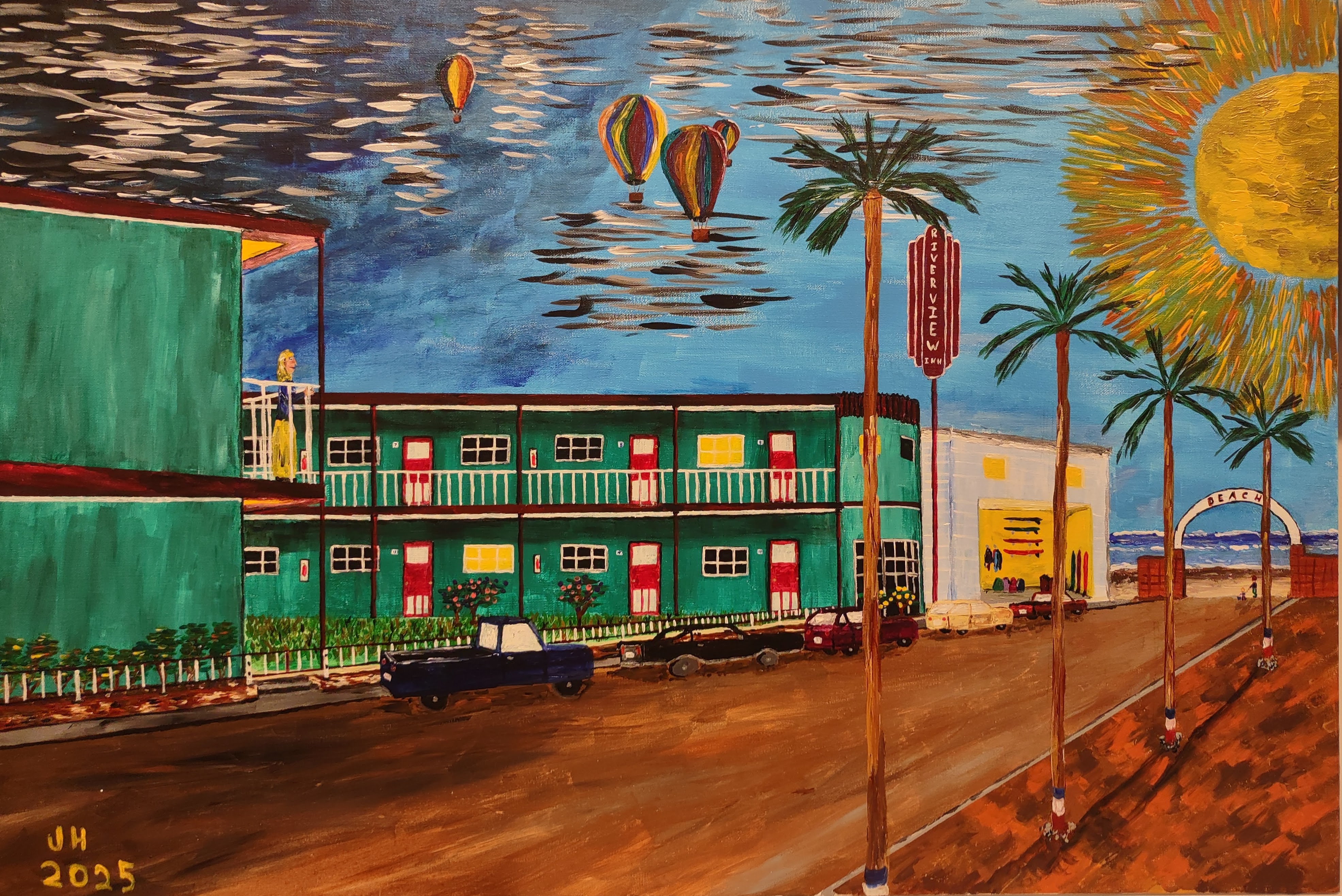
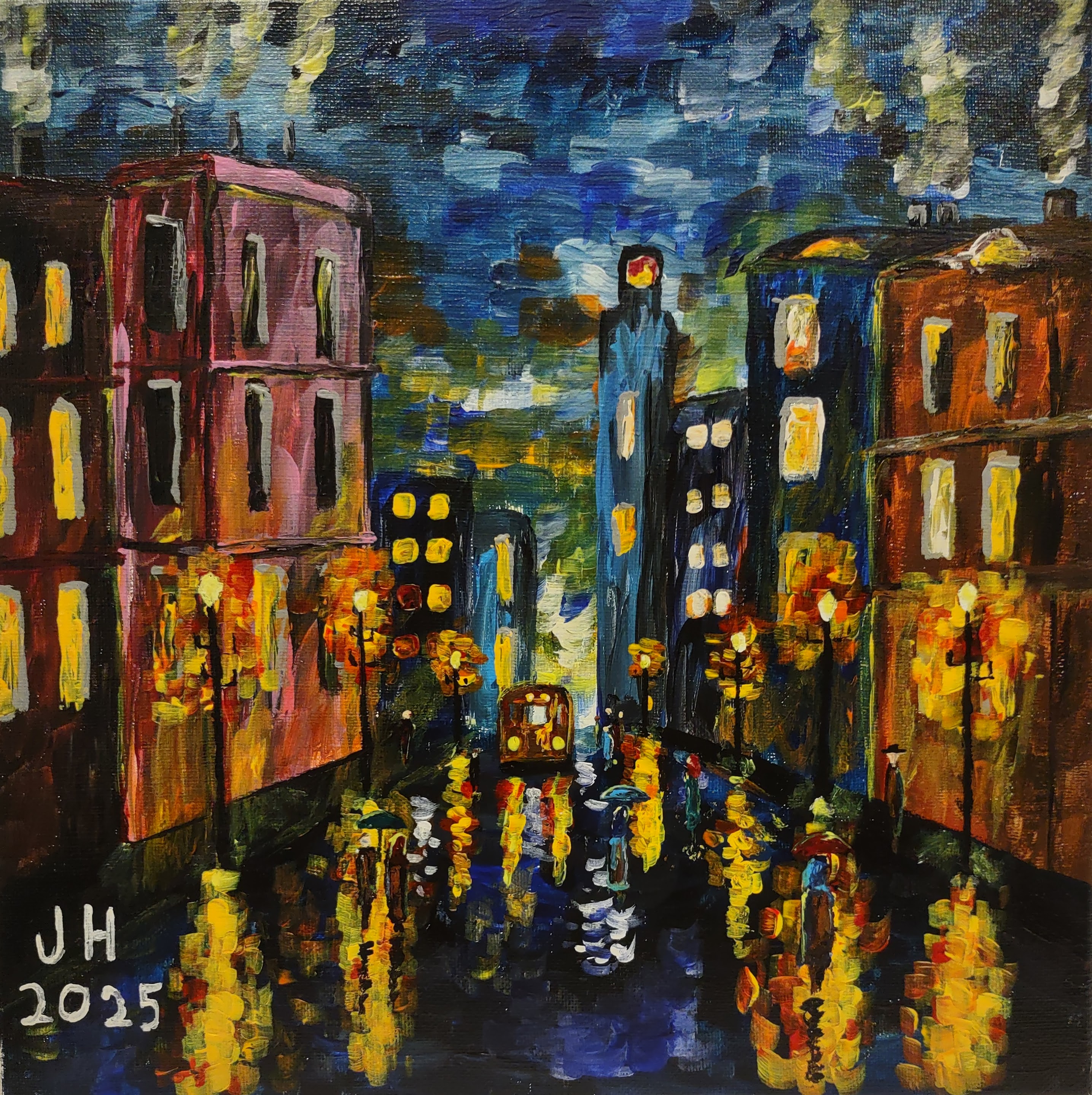
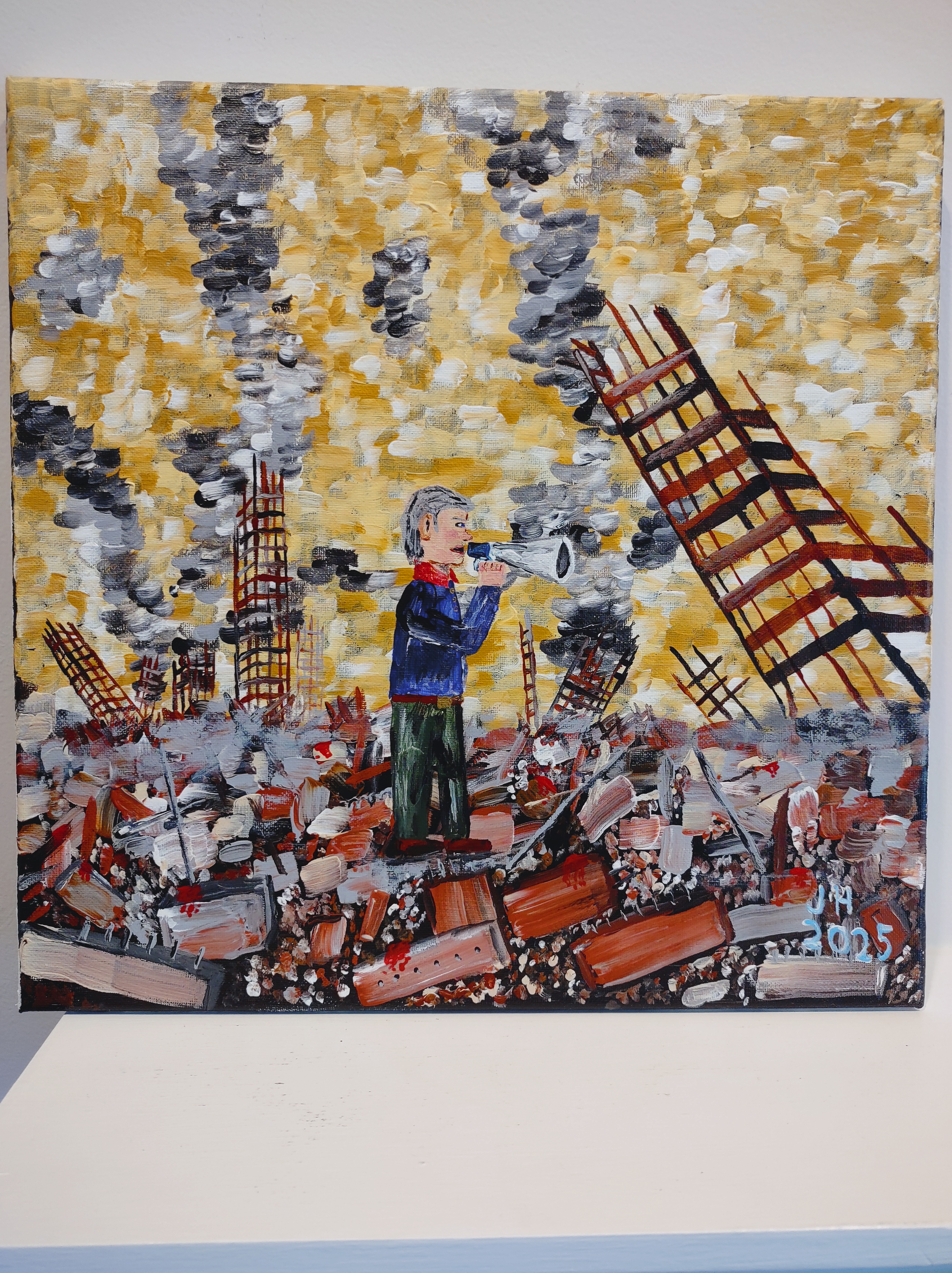
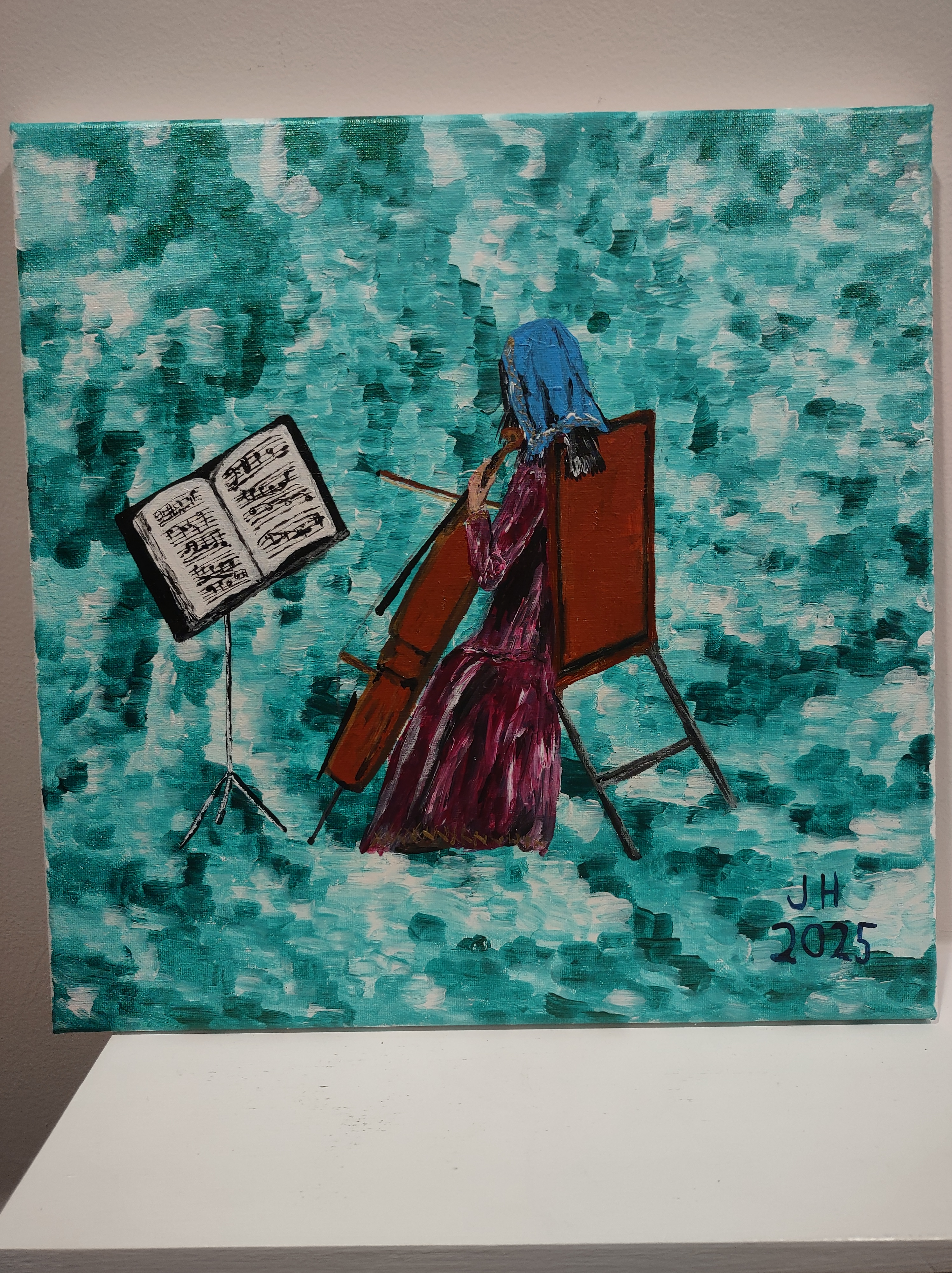
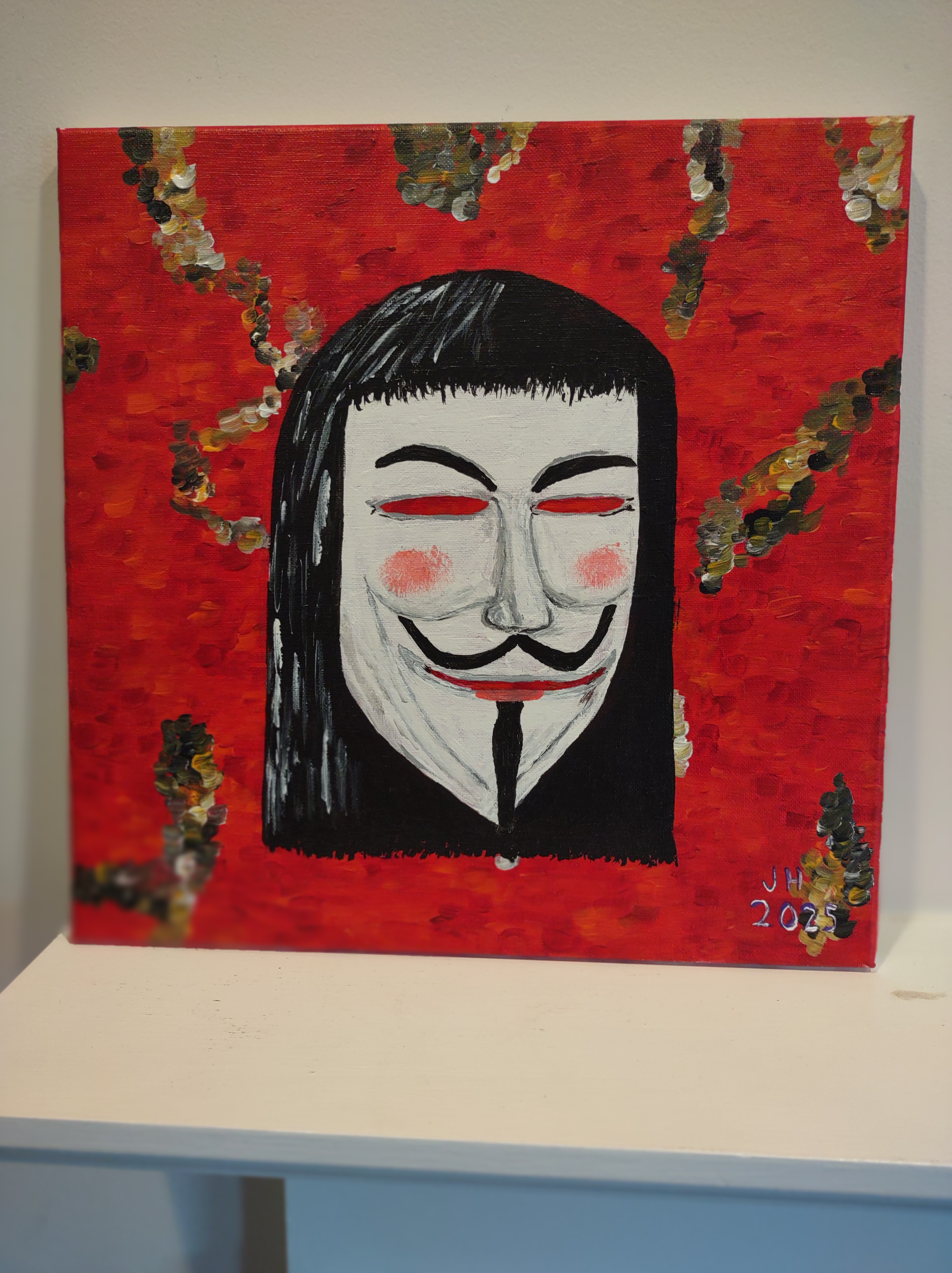
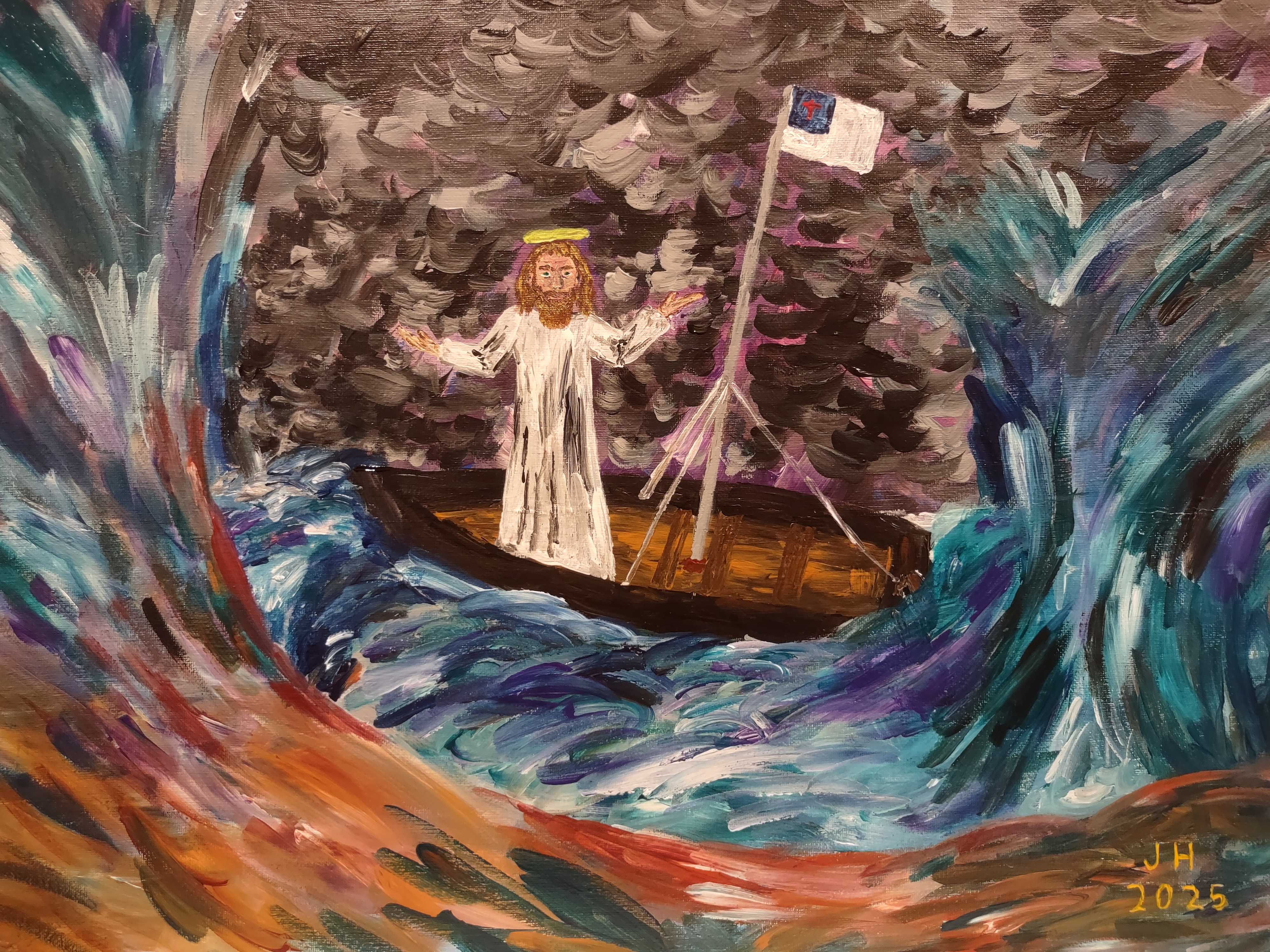
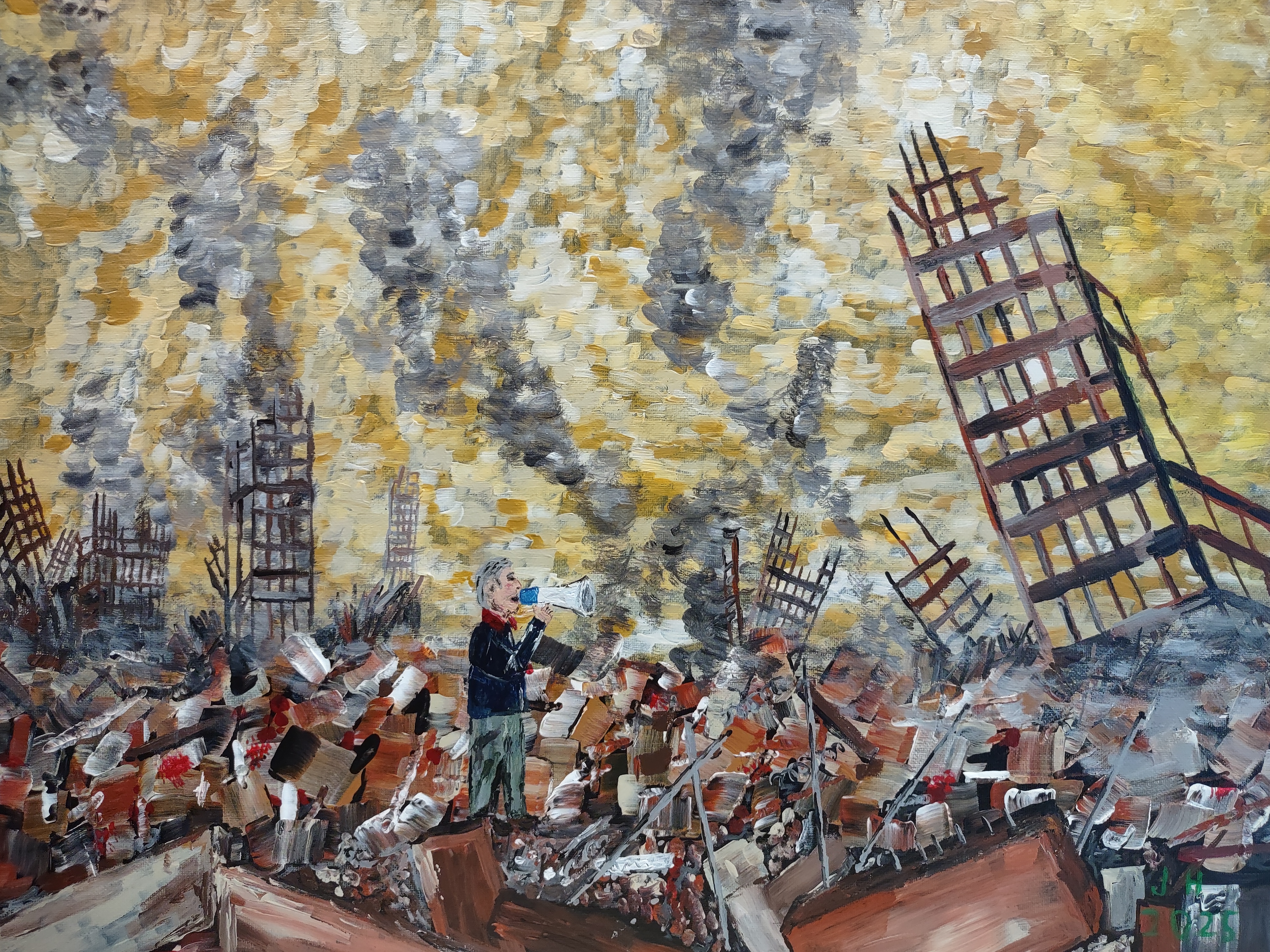
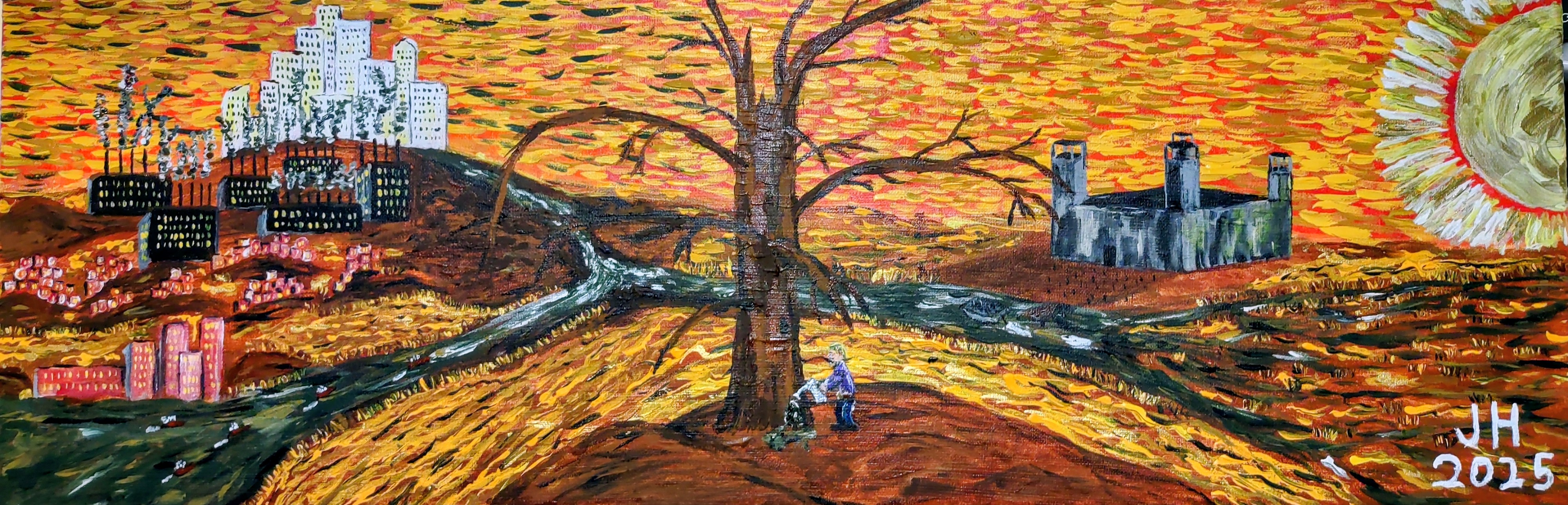
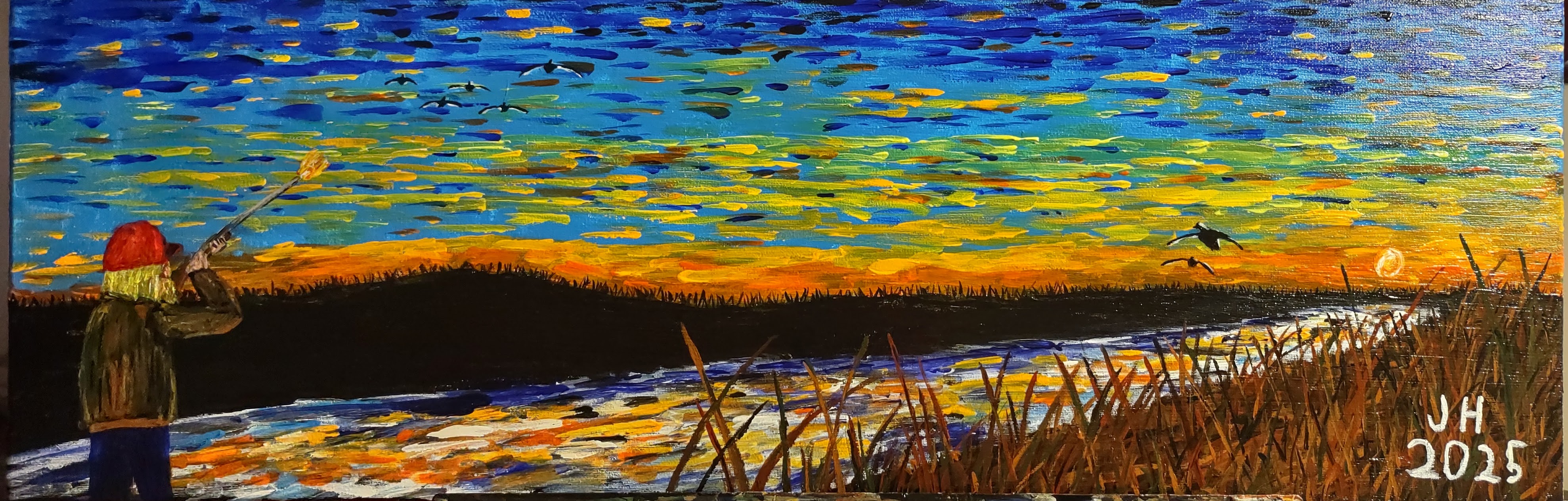
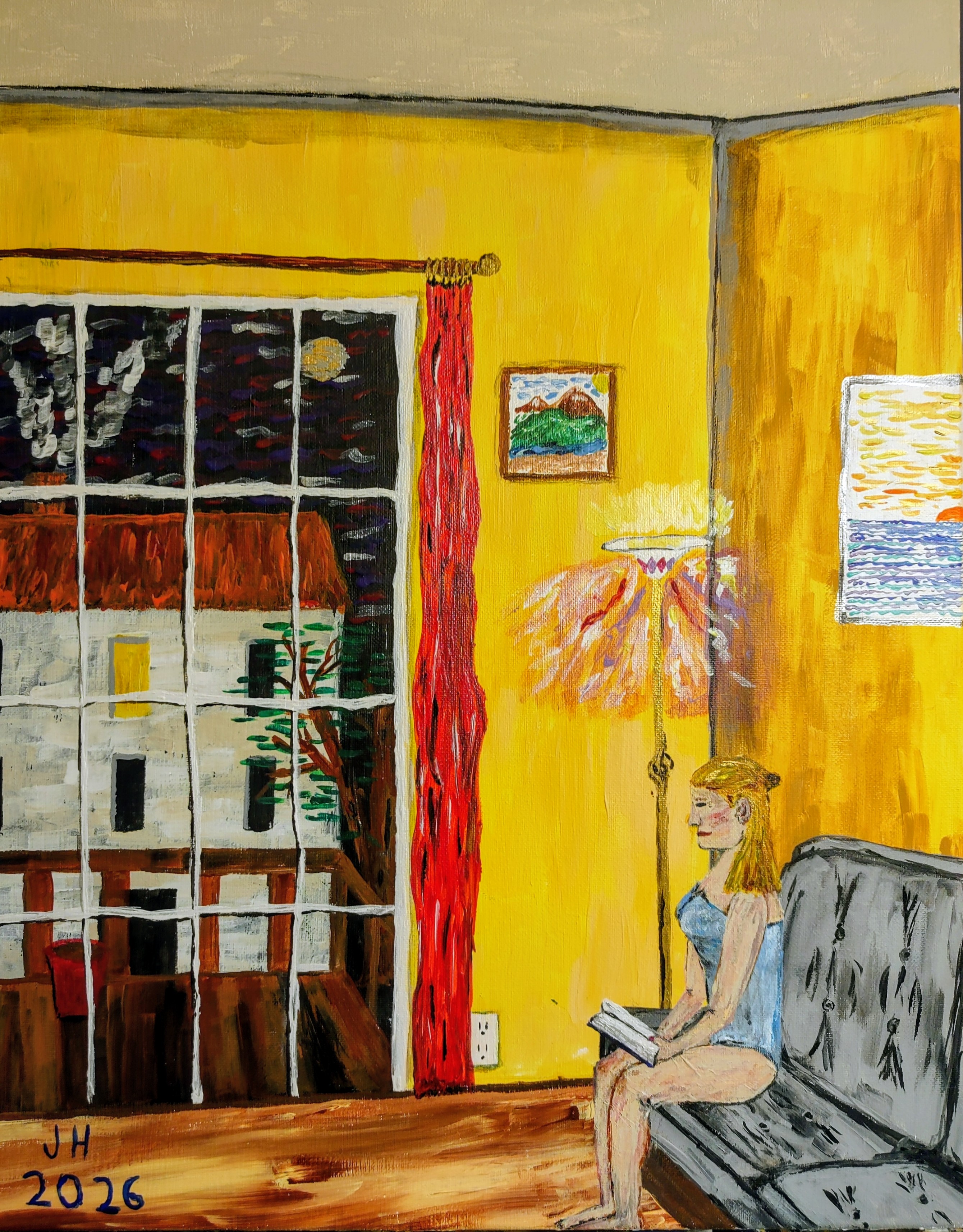
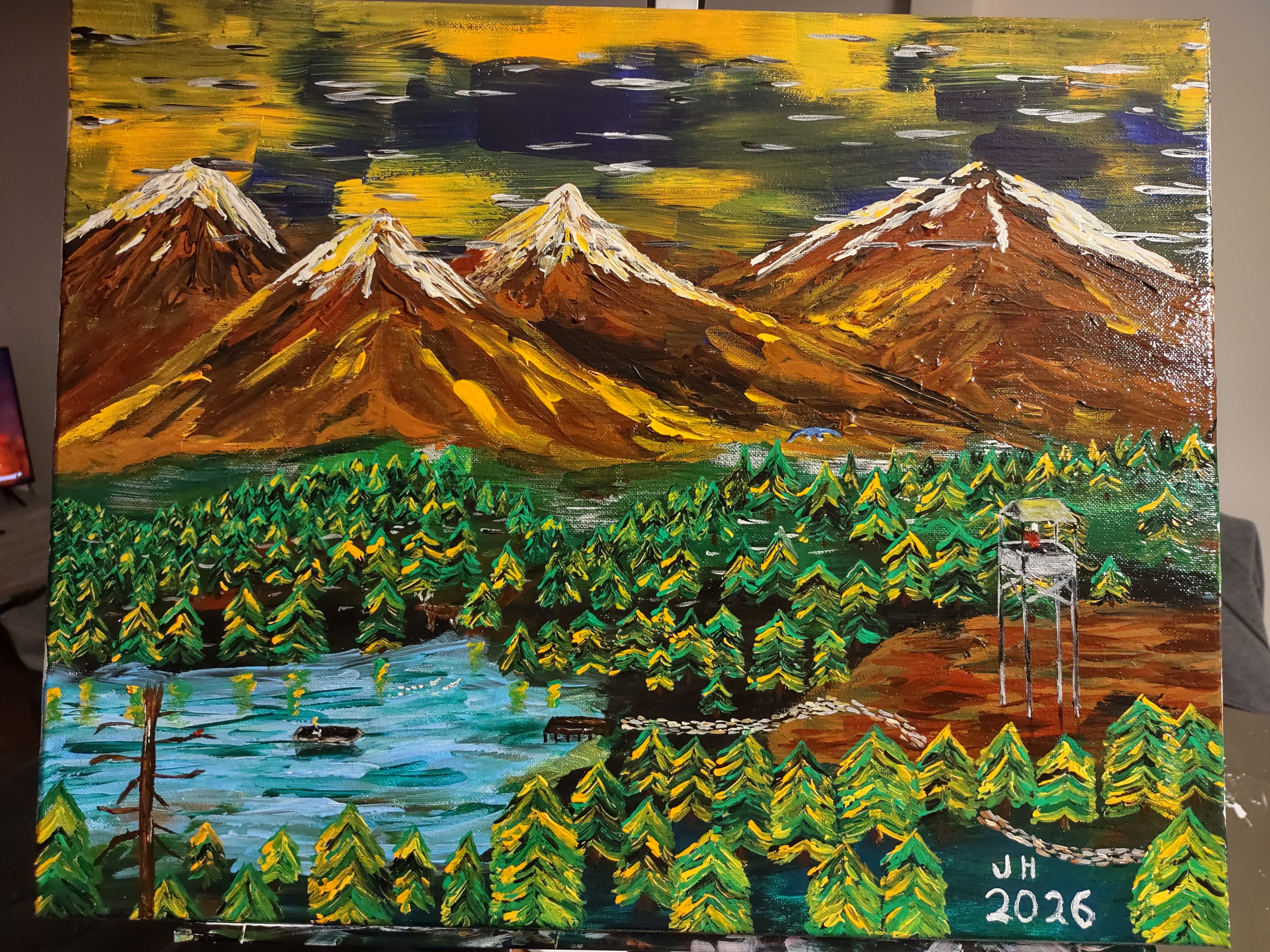
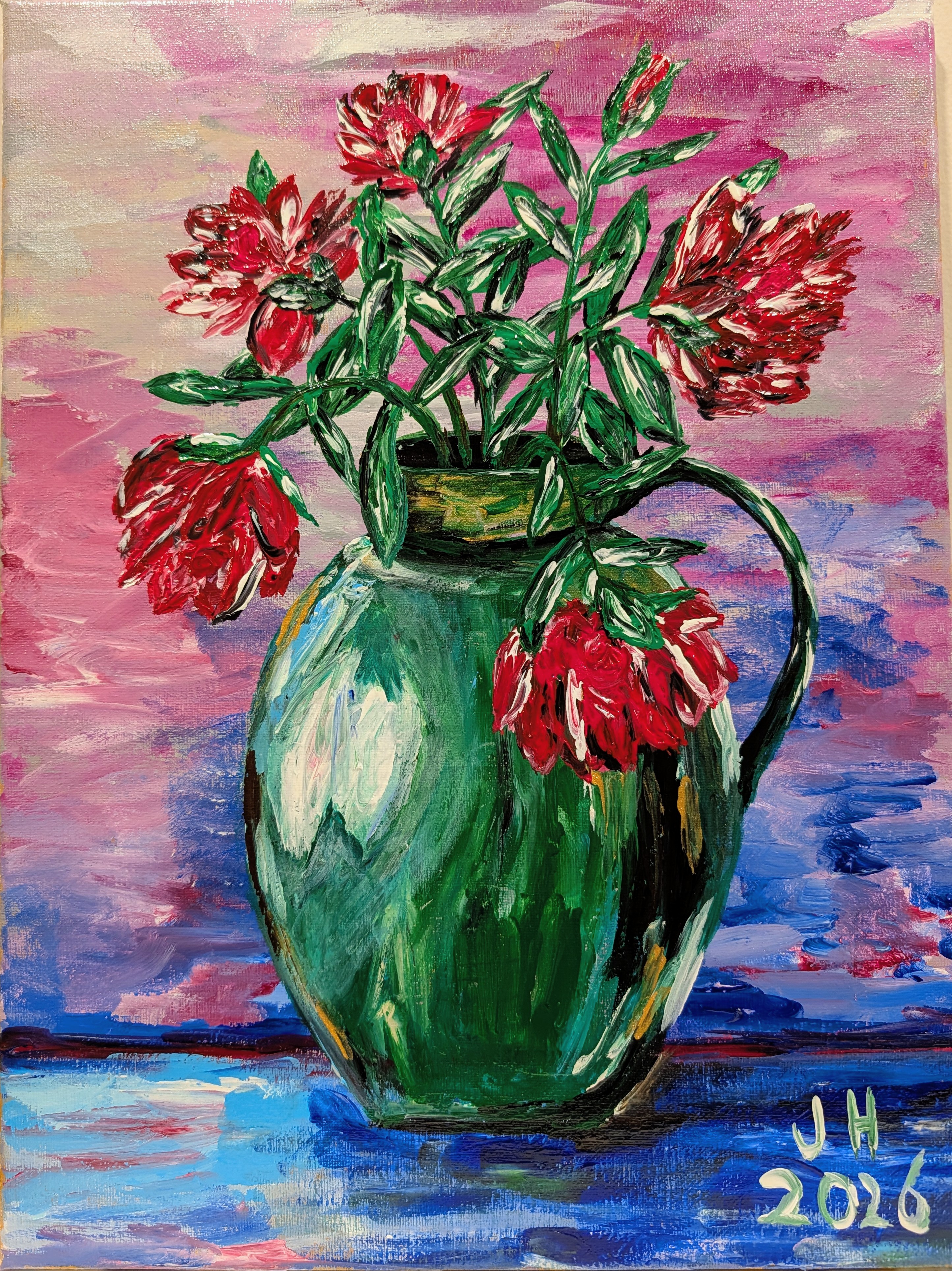
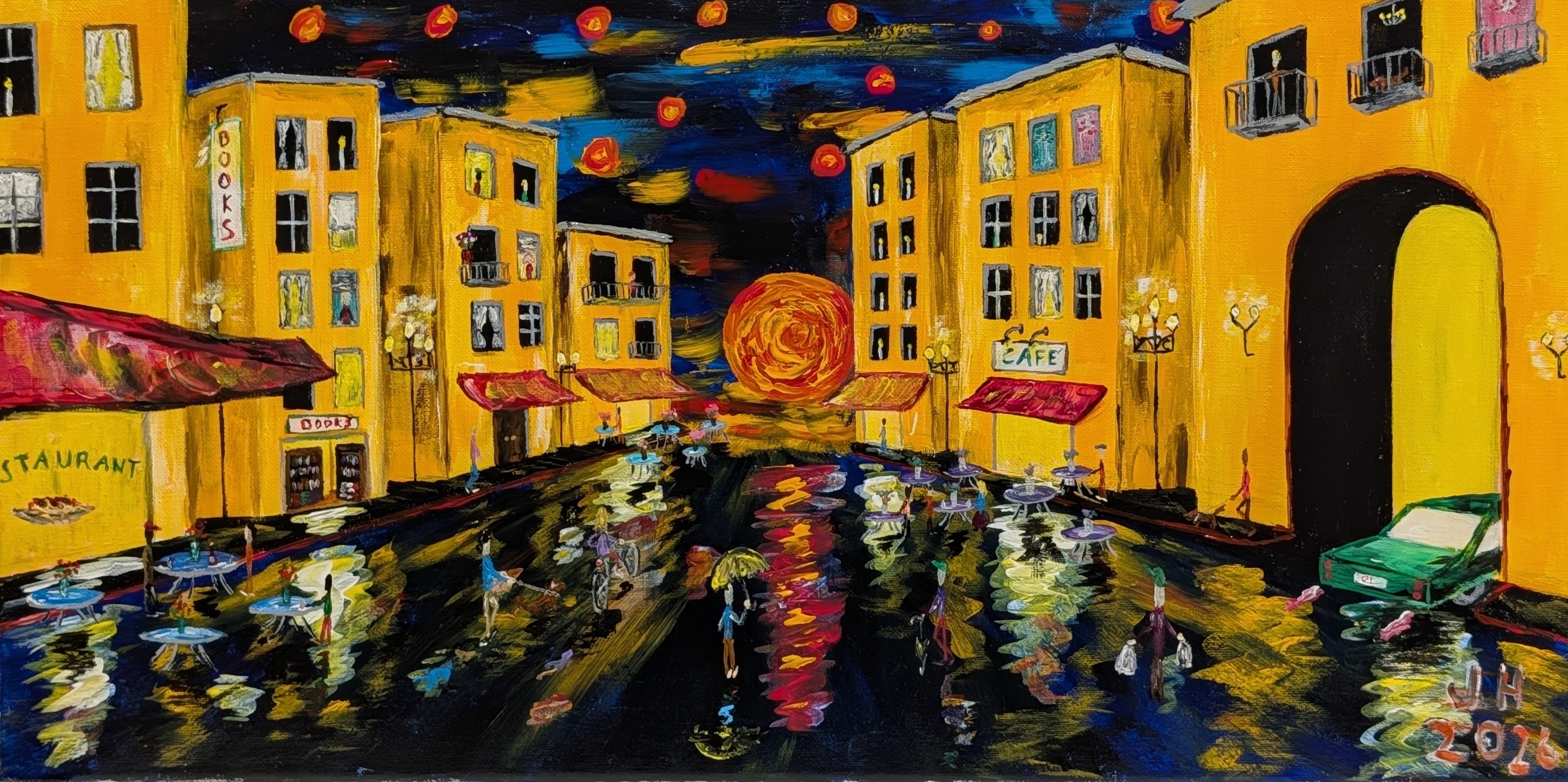
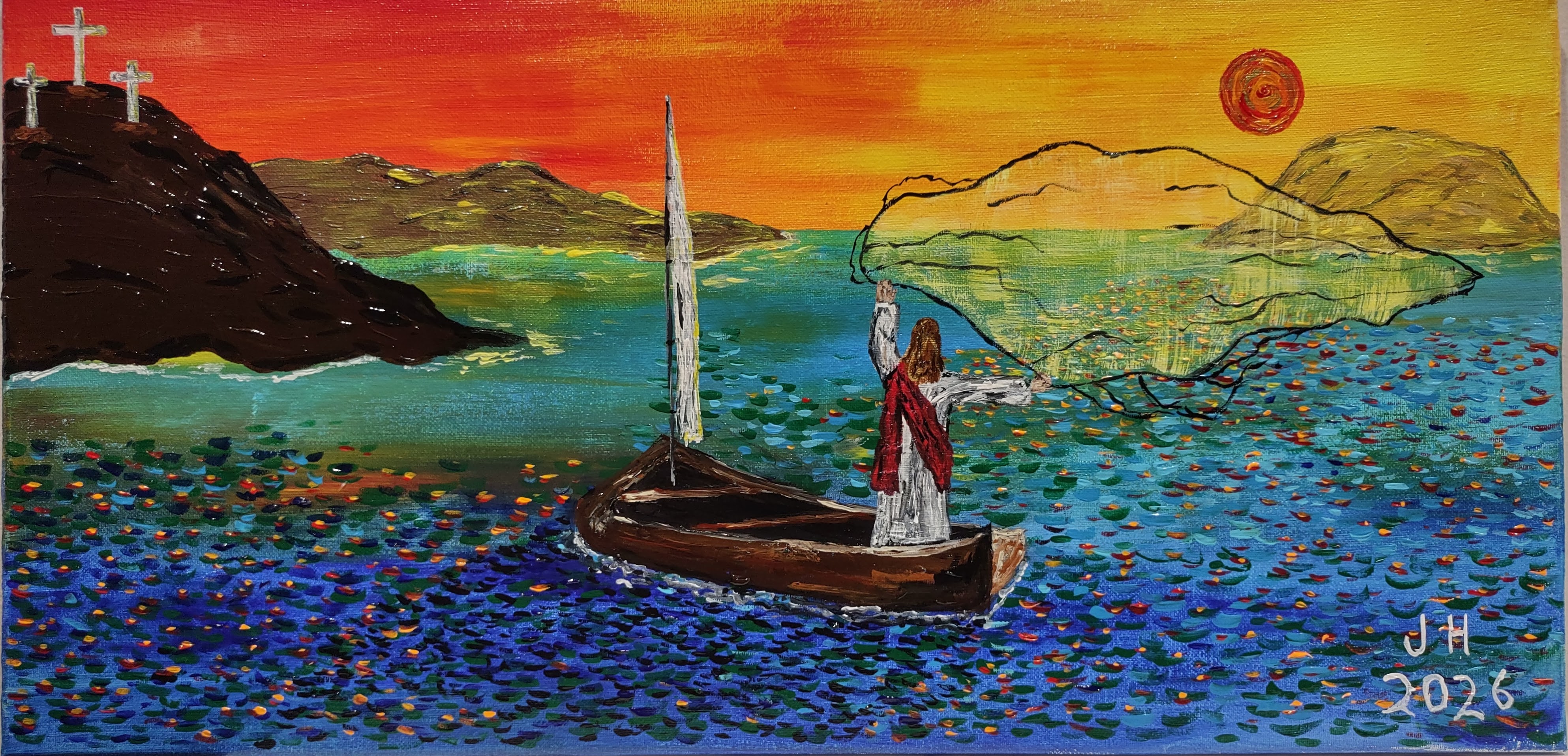
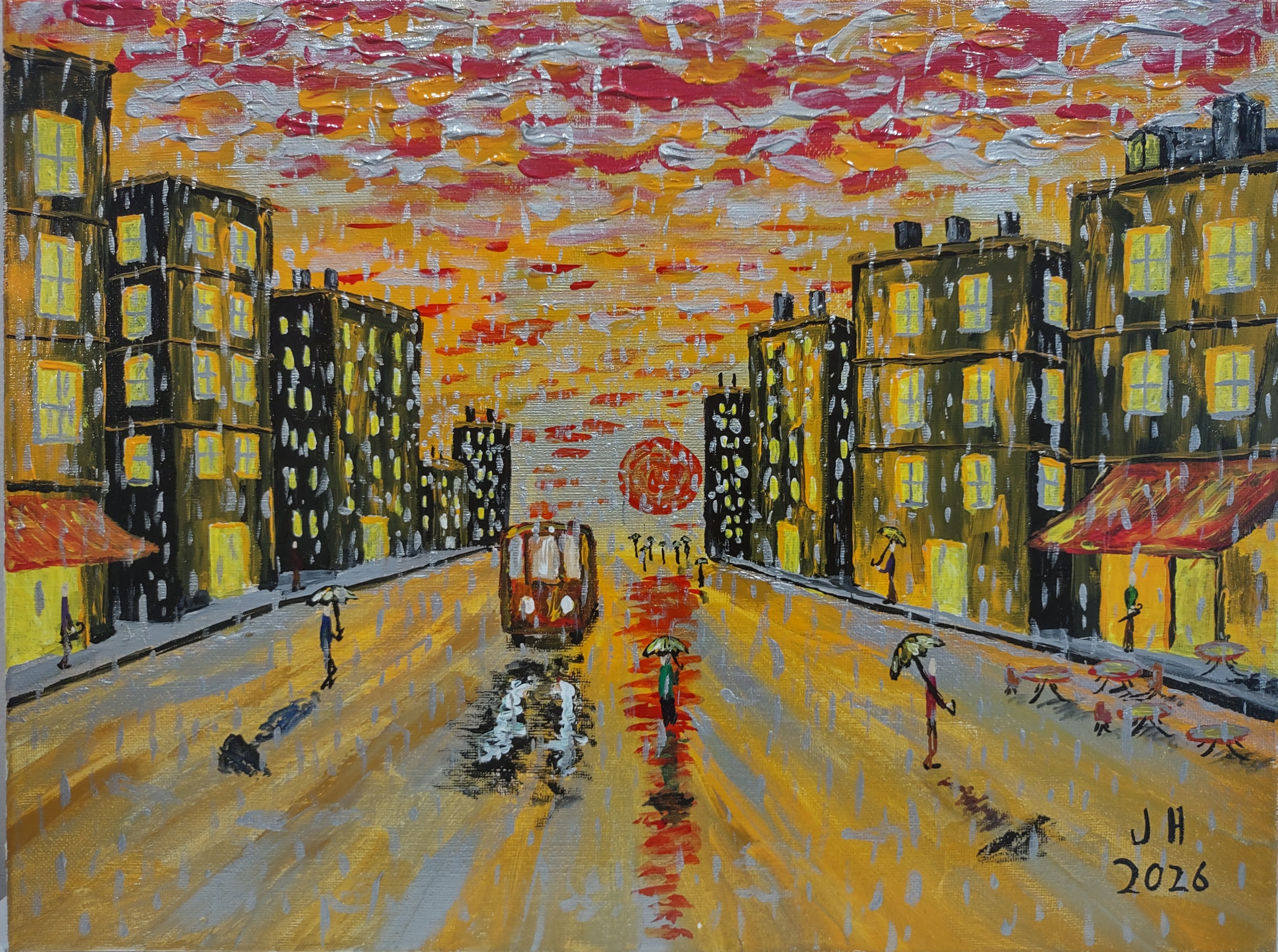
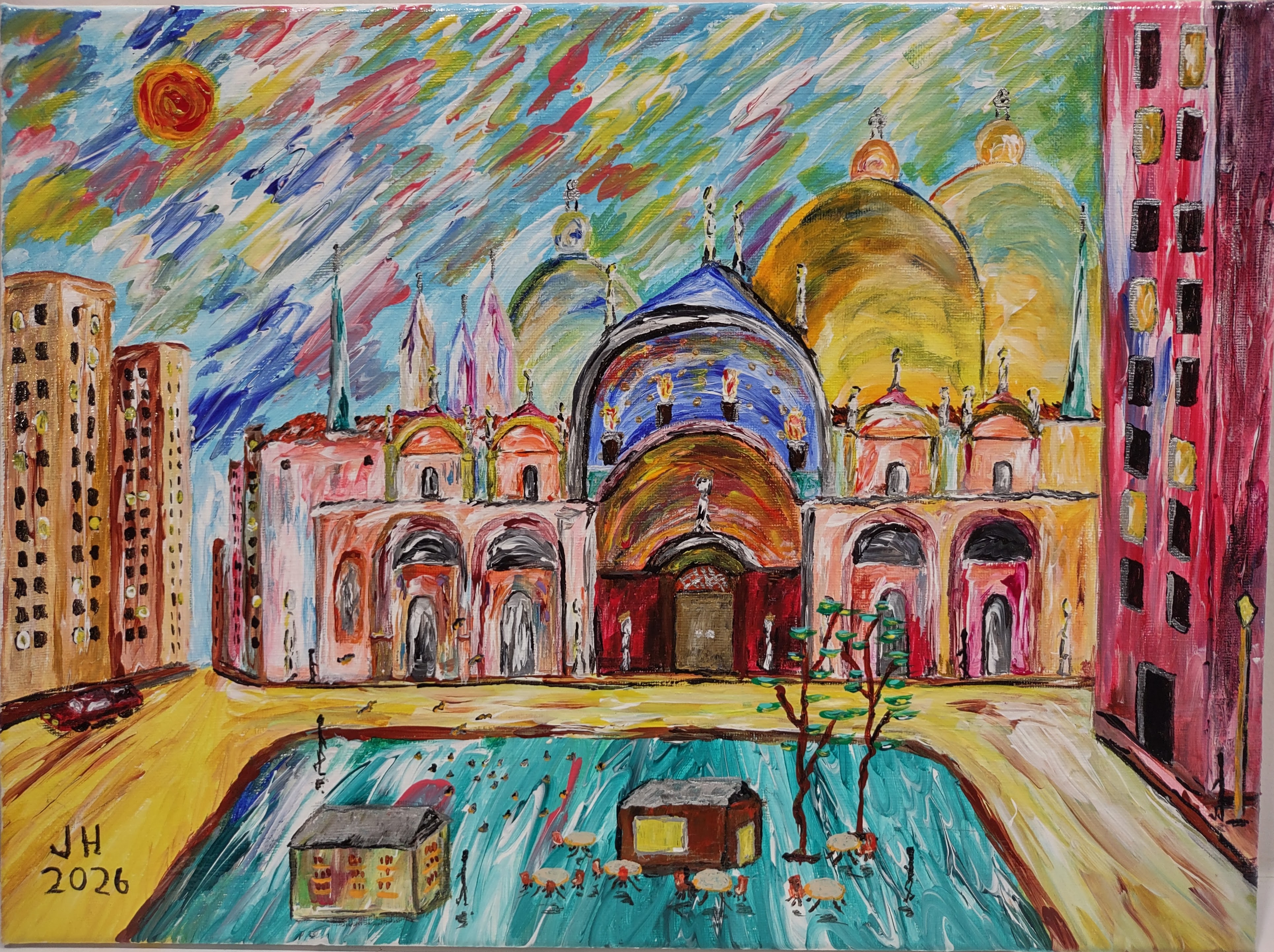
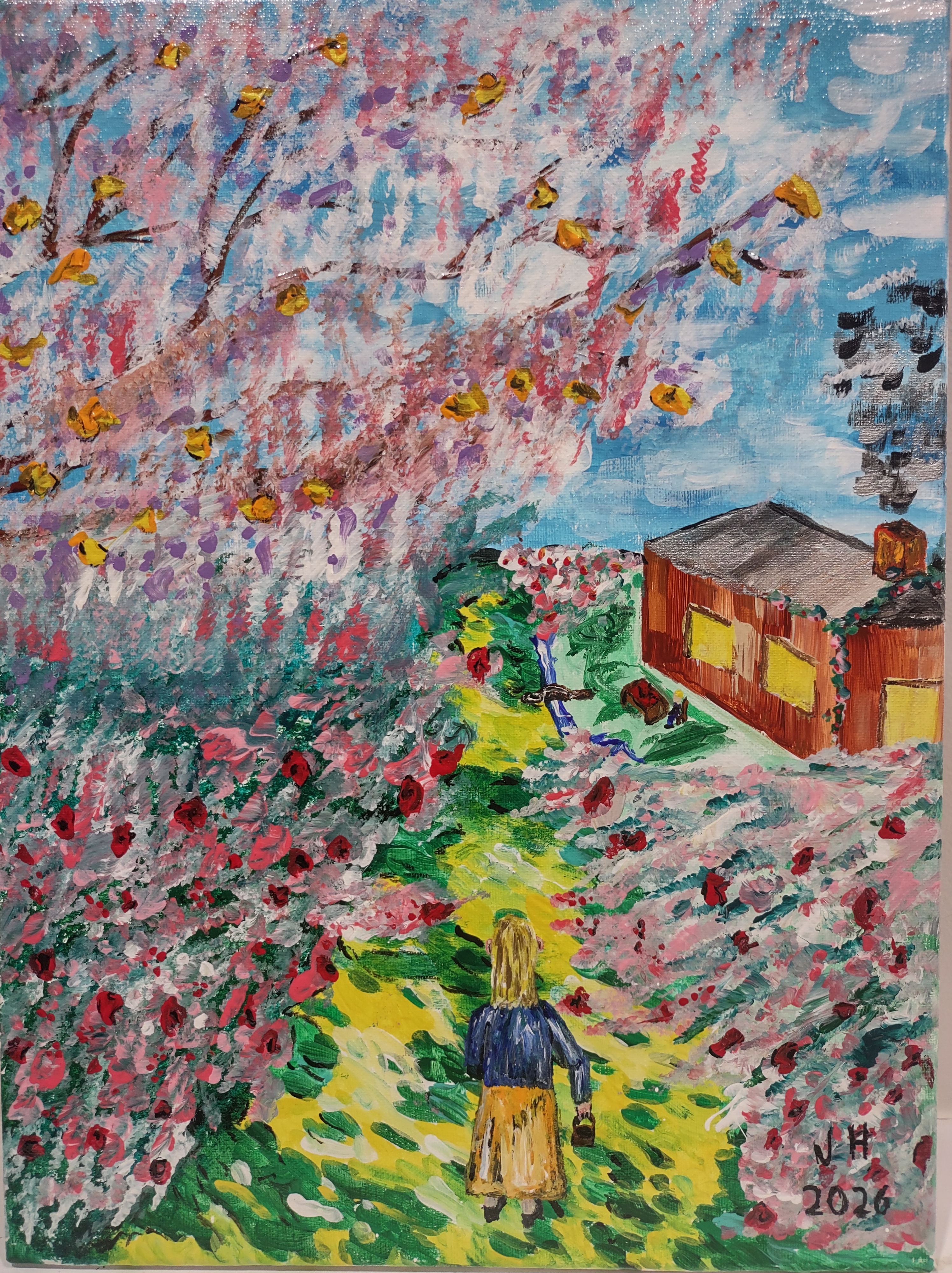
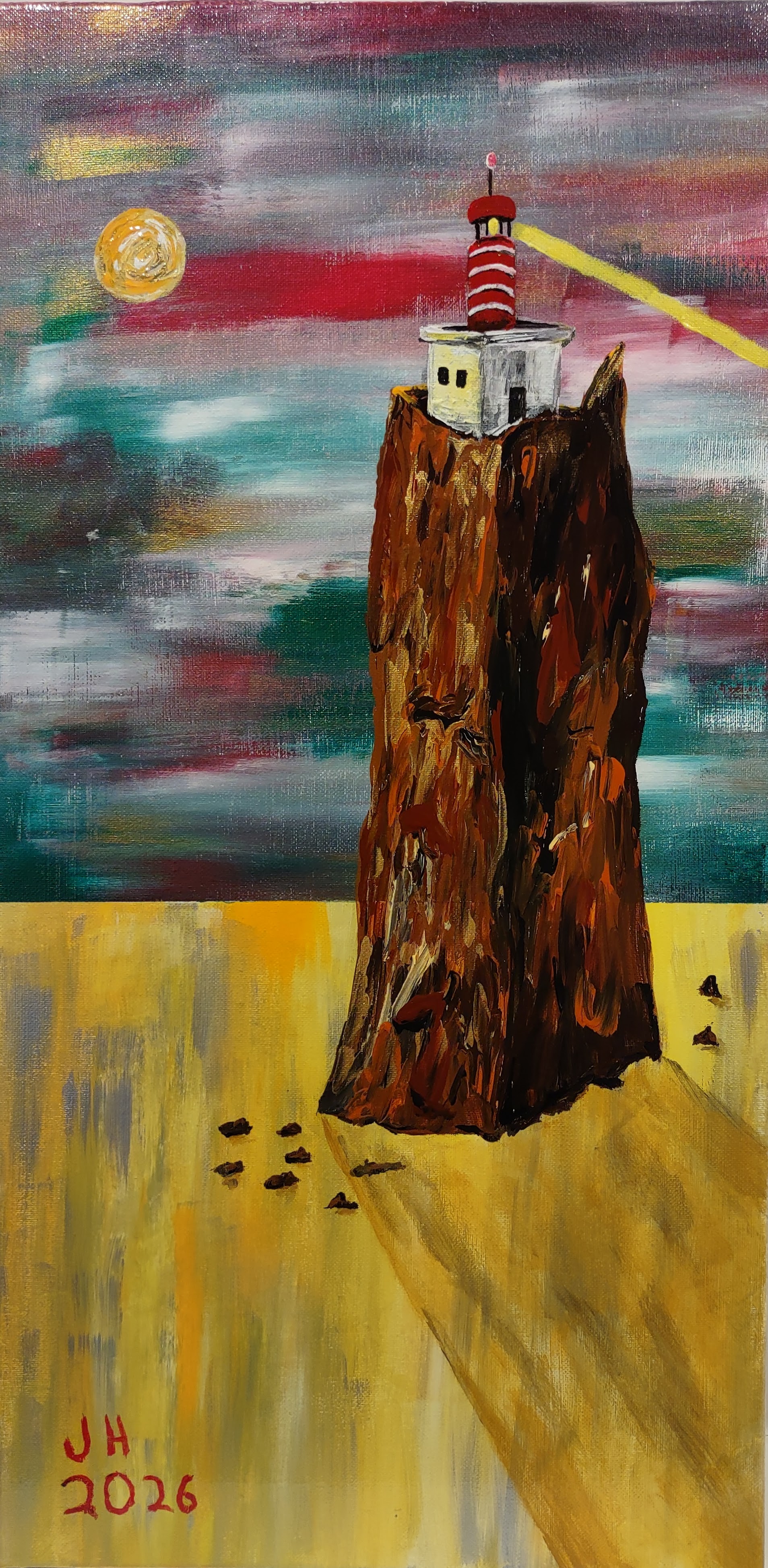
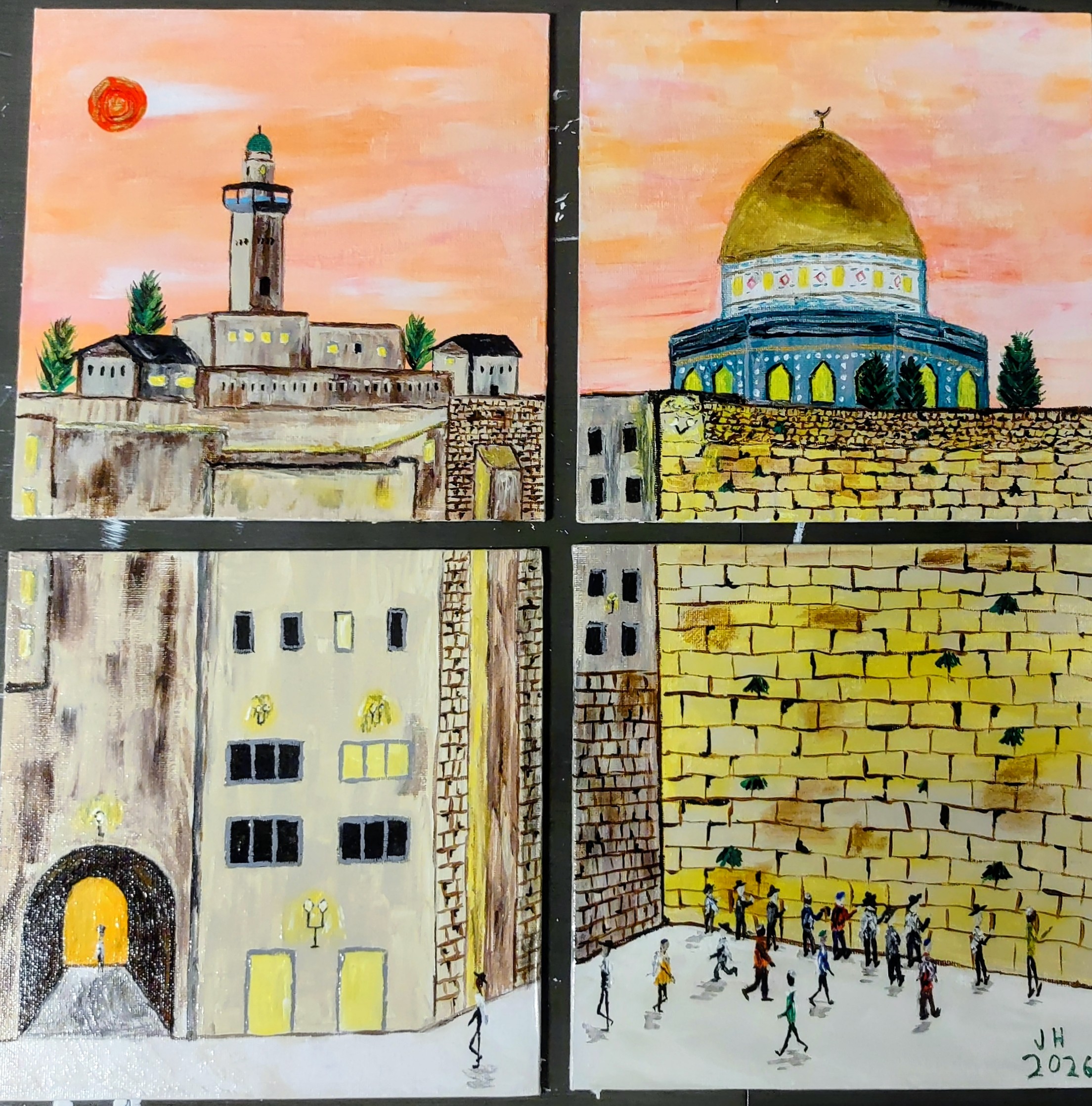
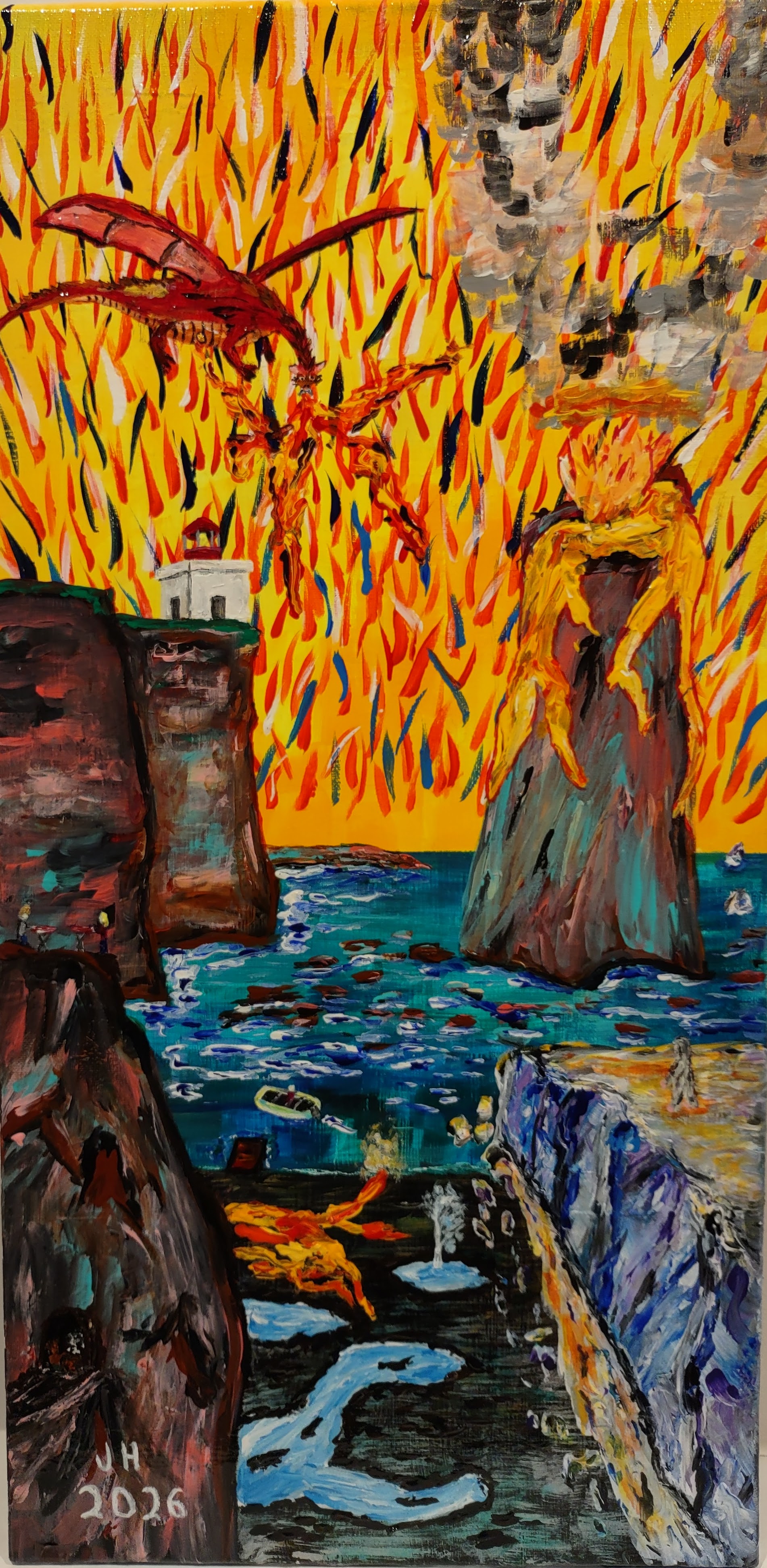
I am taking a break from writing. I’ve been focusing on painting; the world is drowning in words. I want to see if some colors can make anything any better. My last painting was one of Chicago, trying to capture the Wells Street Canyon. Since then, I have gone silent. But here they are, for posterity:
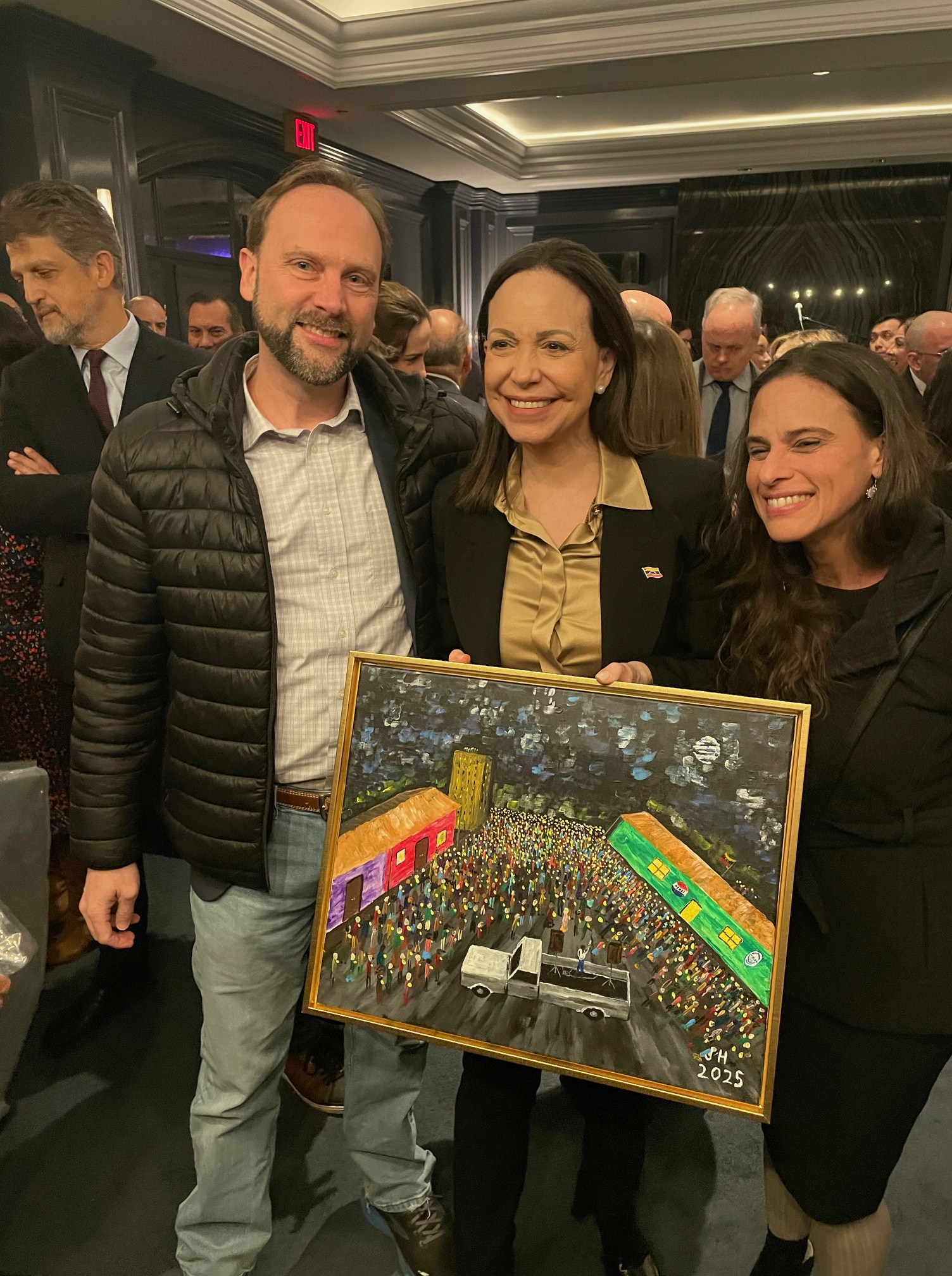
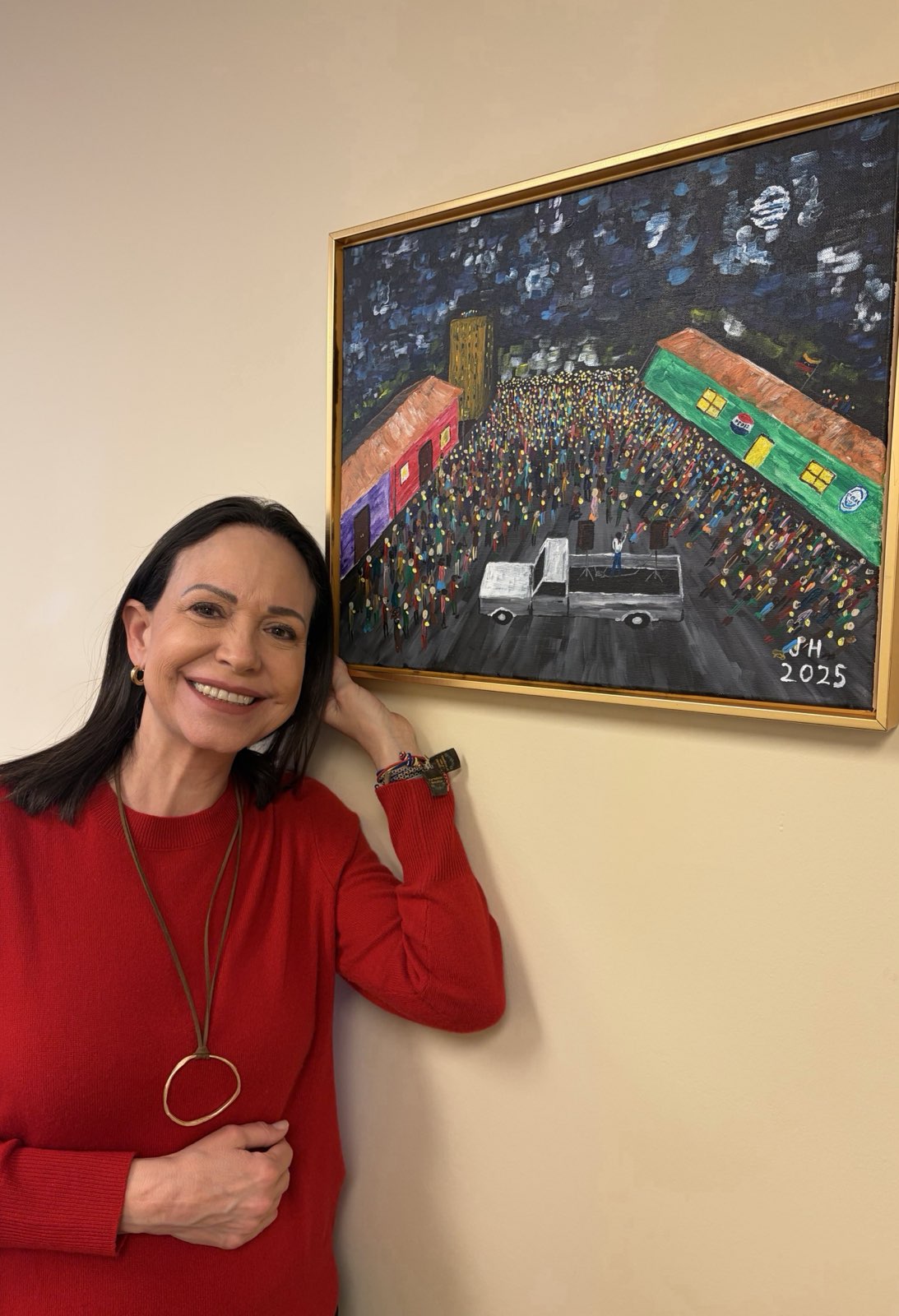
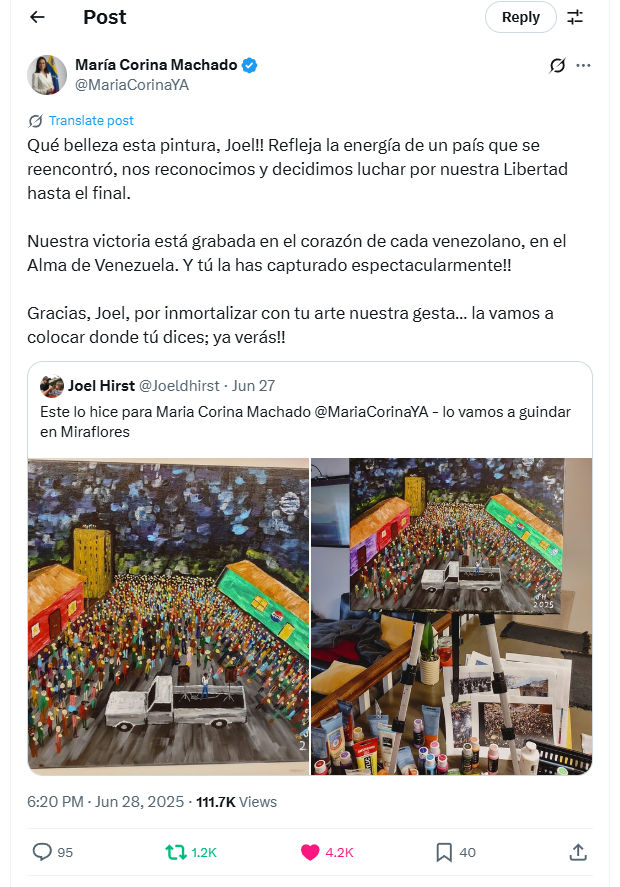
Last time I saw MCM was in Rosario, Argentina during a Freedom Foundation event with Nobel Prize winning novelist Mario Vargas Llosa. Who would have thought MCM would go on to win her own prize. It was very nice to see her again, congratulate her for her award and give her the painting I painted for her, for encouragement, while she was in exile. She uses it a backdrop now for events and interviews — it hangs in the place where her golden Nobel medal should, which is both an honor and sad at the same time.
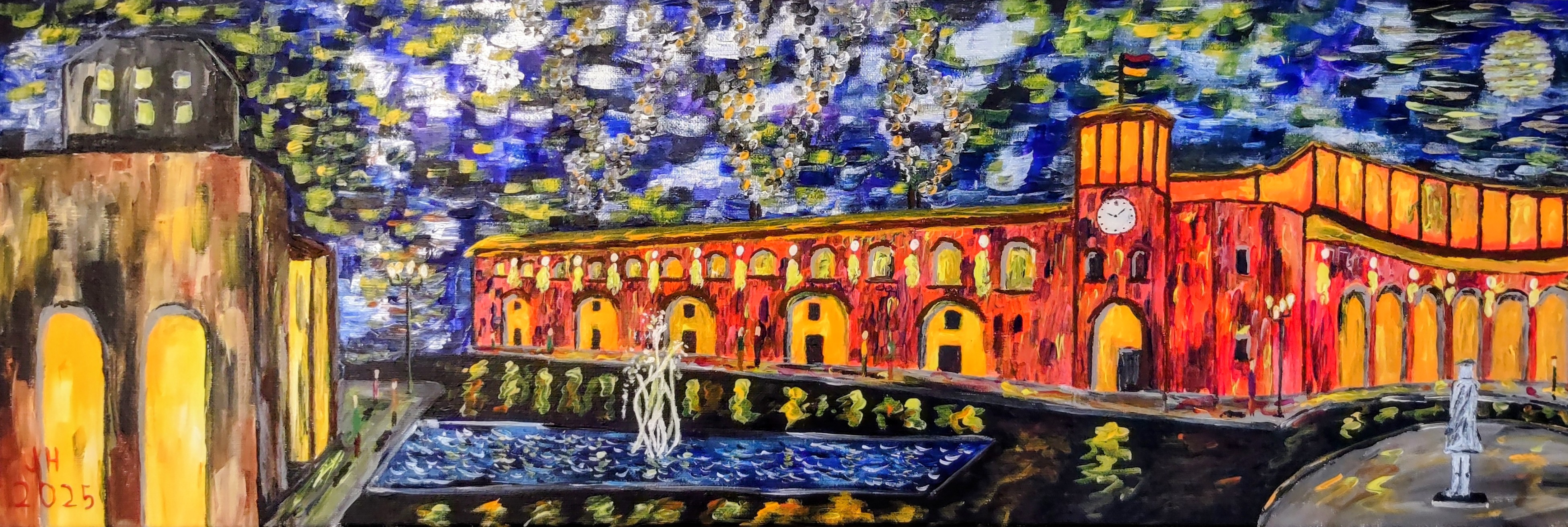
The quiet hum of Ashtarak highway reverberates in the background; the wind rustles the trees, new leaves – excited to show them off after a long cold winter. The city, away down into the valley buzzes with life: restaurants and some night clubs; a couple sits together on chairs outside of a cafe, sharing a secret. He says something in her ear, she laughs. A boy walks with his girl through lovers park, holding her close, its darkness under the cover of the trees now making their intimate rendezvous somehow forbidden. The booksellers are putting away their earnings for the day, stacking their books – covering them with tarps or into boxes; nobody will steal their livelihoods. Tomorrow will come another day, and there will be more opportunities – books are eternal after all, timeless as are those who seek them out — always coming, though never in a torrent the slow trickle never does abate despite the changing winds of world affairs. To escape into something epic and old – after all ambition has burned away is an unchanging fact and these ancient denizens as immutable as the bronze statues of the Cascade are willing to wait.
Tonight is my last night in Yerevan. That sentence was hard to write – I never expected to fall in love with a place and a people as I have here in Armenia. One of those special things that is all the more grand because it takes you by surprise, sweeping you away in a torrent of emotions. I remember my first night in Yerevan, just over two years ago. It was cold then, I walked the outdoor shopping mall – stopping for street food at midnight watching the children at play, “What are they doing out?” There was no pandemic then – there was no war – the “weeping nation” was filled with an almost youthful optimism, exuberance. So too was I. Coming from my wars in Africa, I found the fog that had closed in around my dark night of the soul temporarily lifted. Until the pessimism returned – unexpected and unwanted. But even that did not take away from my time here in Armenia. For Armenia saved my life, and for that I will always be grateful.
To be sure, it was not a euphoric time – as it started out to be. It is unwise, unkind to be too happy in such a time as this; and when the global catastrophe meets an ancient war rekindled… I spent the time – when not in lockdown – in communion with my little boy. I got to know him, really know him – and he grew into a boy here. “Goodbyes are hard” he said to me today, tears flowing freely down his cheeks as he bade farewell to schoolmates. Then it was off, to hunt down the elusive water-snake of the pond. We hiked mountains and made dams in rivers and trekked forests – we ate BBQ and dolma and fruit — so much fruit. Watermelon then cherries then apricots then peaches.
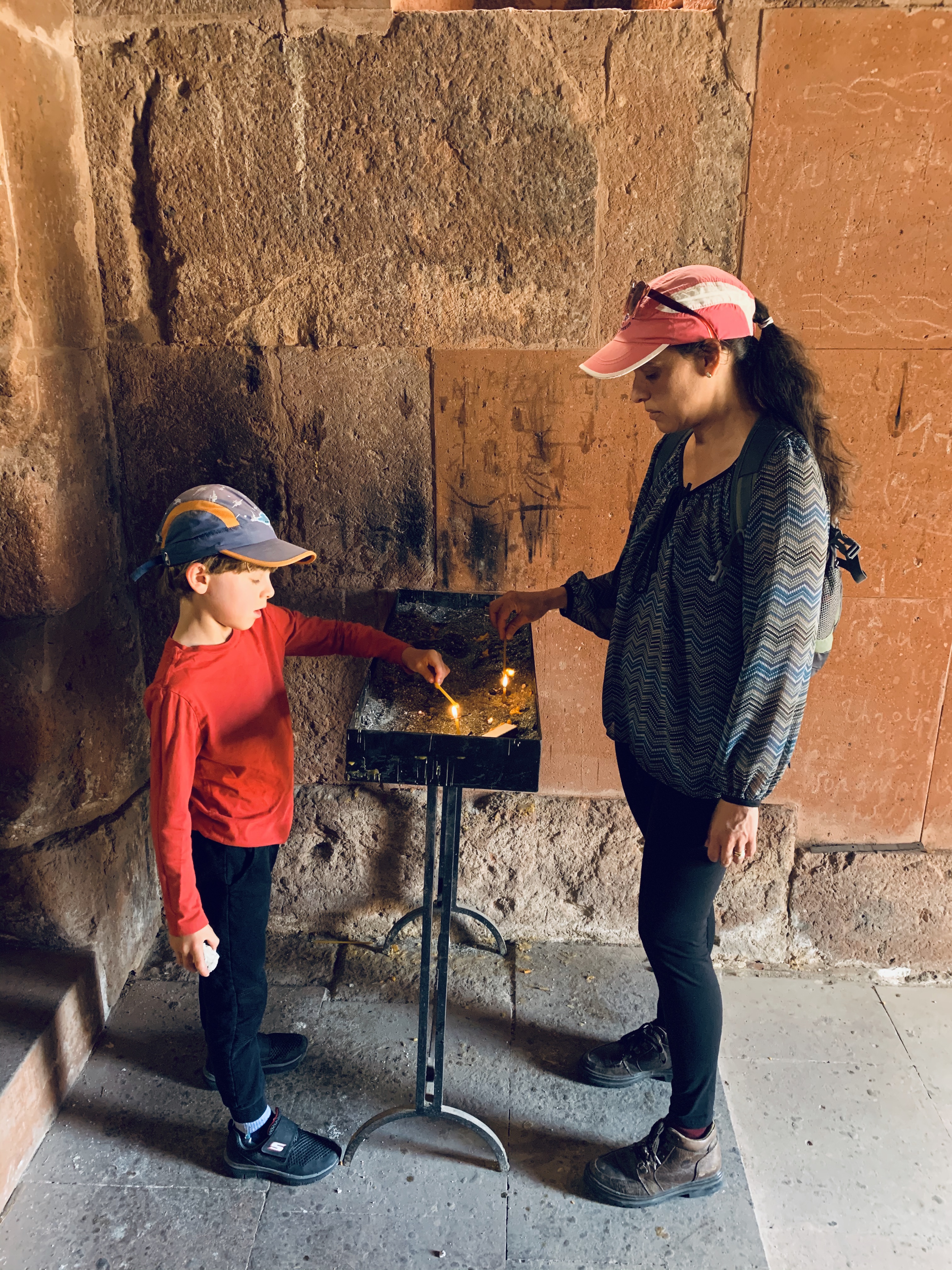
It was a quiet, somewhat lonely time – my time in Armenia. I developed good friendships that remained stillborn upon the shuttering of the world; leaving me with that feeling of wanting, of not being fully satiated like during a meal when they take away the main course before you can partake. I wish I could have spent more time here, debating ancient authors – discussing olden myths – praying in the monasteries black with the soot of a millennium of candles each one’s delicate smoke-trail taking the supplication up to God. And I lit not a few of my own; hopes that went upwards and left their tiny mark upon the intrados of the ancient houses of worship making common cause with so great a cloud of witnesses as this place has.
Tonight is my last night in Armenia. Life is transient and sad; we must come to grips with that. Things come and go and come back around but they are never the same – life is to be lived now, in the fresh pomegranate and the snow-ball fight and the ski adventure; in the moment when your little boy says “Daddy lets listen to music while we throw the frisbee” and though you are tired you pick up the toy and out into the glorious Armenian afternoon you go to revel in life lived now. Because it will never be again.
To be sure, there will be other moments. I will write about them – for those who care to read. And I’m excited about them too; swimming the coves of forgotten beaches – trekking the forests of my land – experiencing the vastness of the place that is my home and that I have never really experienced, not the way I plan to. But I will always take Armenia in my heart; and if I find myself comparing a golden valley high in the Rocky Mountains with a beautiful highland south-Caucasus pass – you might grin and forgive me. For I once lived in Armenia – and that changed everything.
“That is why I love America,” he said to me this morning, eyes watering. “A land where immigrants are welcomed and can free themselves of the shackles of the past – of the old country which we love so much, with a love that is laced with sadness.”
That is what Armenians feel about America. There is something special about Armenia – about Armenians. You feel this in the Diaspora, people who have found a way to fully embrace the chaotic turbulence of America without losing their serene passion for the “old country” – being both from there and from here, fully a part of both – which is in fact the spirit of America. A spirit which is exemplified in brilliant prose by Armenia’s amazing American writers. Leon Surmelian “I Ask You Ladies And Gentlemen“, the penultimate chapter of which was a sonnet to immigration, to the yearning for the old country that finds itself in a gratitude to the land of the free so beautiful that I had to put down the book and rush to find my wife, sitting her down – for she is also an immigrant to America (she from South America) – and read it to her aloud. Or “Song of America” by George Mardikian, a restauranteur and philanthropist from California who was also from Western Armenia and found upon the slanted streets of San Francisco what he could never find in Istanbul: washing away from himself the misery of Ottoman violence and Soviet oxygenless totalitarianism with all its myopic brutishness to experience the joy of opportunity in making amazing food for a grateful American public.
“I don’t understand this new generation of Americans,” my new friend went on. “They somehow don’t see it, don’t see that even though they don’t feel like they are privileged, they nevertheless are – juxtaposed against anybody from anywhere else.”
“Civilizations rarely survive so great a prosperity as we have known,” I responded. “It makes people think only about stuff, and makes them greedy. And the greedy know only bitterness and theft. They cannot see beauty anywhere in anything, which only makes them angrier and more dangerous.”
This morning I was sitting quietly on a leafy street in Yerevan reading “The First Man” by Albert Camus (review forthcoming, for it is Camus’ best work!) when my new friend approached me, representing as he did for me everything I love about Yerevan, about Armenia – and why it saved my life. “Camus!!” he said. “Great writer!” to which I of course responded. We then got into a wide-ranging conversation about why America was so divided, the sadness of seeing people who have so much, tearing each other down in so terrible ways and our joint hope that we would somehow find our way (we, because my new Armenian friend was American too). “America saved us,” my friend said. “It is a land of so many people, from so many different places!”
Its ironic that I had to fly so far from home, to a tiny land-locked war-locked country trapped in the mountain fastness of the south Caucasus to be saved. What was it that saved me?… you might be asking. Armenia is a conservative place – not in the political sense but in the civilizational one. A place where days are measured by hard work sunup to sunrise, weekends are weighed by the amount of meat on the BBQ and the number of family members at the wedding, and love is measured to the height of the great Mount Ararat that sits in silent supervision upon Yerevan, a reminder both of the timelessness of Armenians’ sojourn on this piece of land and of a bitterness like the black Armenian coffee – for Ararat sits in Turkey (what was once Western Armenia). I was saved by beauty. The painters that sit in Saryan square across from the Opera House (and where I bought not a few paintings); the alpine valleys where the delicate flowers grow beside crystalline mountain springs runoff from the melting mountain snows; the dark forests where the Divs still live and hunt their prey in solitude and mystery. The monasteries still in use by the monks who see the world not in years or decades but still talk about the Council of Nicea, of Gregory the Illuminator and the times when the apostles wandered through these places. I often wonder what Thaddeus and Bartholomew must have thought, replacing the vast open expanses of desert for the alpine mountains and the delicate rivers and the smells of sheep. Did they also look up at Ararat and wonder if the Ark was to be found there? I think they too loved Armenia, which is why legend places their graves here.
I was saved, more than anything, by the literature. Armenians from the Armenian boom days (in the 20s and 30s, behind Churchills Iron Curtain): Gevorg Emin, Yegishe Charents, Aksel Bakunts, Gurgen Mahari. So many others who nourished each other and often met their doom at the hands of Stalin or Beria’s brutes. Those who fled Western Armenia, from the genocide, making their way to America: Leon Surmelian and William Saroyan. Poets and composers like Komitas – the greatest of all composers – who lost his mind in sadness at the wickedness and died in Paris. His olden lament “Krunk” played mournfully, heart-wrenchingly in a recently bombed out church reminding us that the story of the Armenians goes on, that the ‘weeping nation’ continues to weep. “We live in a bad neighborhood,” my new friend says. And he is right, this place is so vulnerable, so weak and yet so resilient and full of the past and surprisingly the future.
Armenia saved my life, because America under the new maoist ‘dictatorship of culture’ has become an oxygenless place, especially for those who don’t really believe in ‘progress’, for those who think of an ancient faith born in Ur as still having the answers, and those who know that a great God sees the suffering of His people and rewards them for the trials they face on earth. Armenia saved my life because it reminded me that prosperity is tyranny in its own way, because it sets us apart from our God and asks us to put our faith in men, and they wicked and self-dealing; because it creates a natural client-body that is grasping and wicked and mean; and Armenia reminded me of the paradox that material wealth and spiritual poverty often go together, and that those without great affluence are more often more in love with the beautiful things and the quiet lovely places, the hope of peace in times of war, the gentle caressing of a pomegranate and the silent mountain vigil, beside a fire and warmed by brandy as the soft grunting of the sheep clustered together for warmth pervades a peaceful mountain night. No gadgets, no iPads, no tunes (Apple or otherwise) – just a man alone with his thoughts.
Armenia saved my life because it reminded me that there are still good places of beauty, good people who love their families and their freedom as a natural reaction to lives of difficulty which they are nevertheless not bitter about, though they are often sad; that despite the rise and fall of countries, empires and dynasties, there are things that remain good and true.
Back to Camus, there is very little of Camus’s existentialism here – to say nothing of the Nietzsche nihilism of America these days; except that one piece of yearning which does pervade Camus’ prose, the desire to live a good life, the discovery of wonder, and the hopefulness for a better tomorrow.